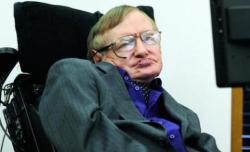
Mikhail Elyashevich
 Belarus
- Early Life and Education
- Scientific Career
- Scientific Contributions
- Historical Studies
- Personal Life and Legacy
- Order of Lenin
Early Life and Education
Mikhail Yakovlevich Elyashevich was born in Munich, Germany, on October 29, 1907, to Alexander Borisovich Elyashevich and Ekaterina Mikhailovna Filipenko. His family had moved to Germany from Russia for educational purposes. In 1925, Elyashevich enrolled in the physics department of Leningrad University. After graduating, he worked at the State Optical Institute (GOI) under the supervision of A. N. Terenin. In 1931, he joined the Institute of Chemical Physics of the USSR Academy of Sciences, working under Yakov Ilyich Frenkel.
Scientific Career
In 1935, Elyashevich moved to GOI to work under Vladimir Alexandrovich Fock. He defended his candidate dissertation in 1937, which was later published as a monograph. In 1944, he defended his doctoral dissertation. In the late 1940s, he participated in the Soviet nuclear program. From 1946 to 1951, he headed the Department of the Leningrad Institute of Precision Mechanics and Optics. He taught at the Leningrad Pedagogical Institute from 1952 to 1954.
In 1956, Elyashevich was elected as an academician of the National Academy of Sciences of Belarus (NASB) and moved to Minsk. He became the head of a laboratory at the Institute of Physics and held this position until 1979. From 1968 to 1977, he also headed the Department of Atomic and Molecular Physics at BSU. He taught nuclear physics at BSU from 1977 to 1983. He was a scientific consultant at the Research Institute of Applied Physics at BSU from 1983 to 1990 and chief scientist at the Institute of Heat and Mass Transfer of NASB from 1990 to 1995. From April 1995, he was an advisor to the director of the Institute of Molecular and Atomic Physics of NASB.
Scientific Contributions
Elyashevich made significant contributions to spectroscopy, plasma physics, and the history of science. He is best known for his work on the theoretical aspects of molecular spectroscopy. He proposed a new approach to describing polyatomic molecules. These results were presented in the classic work "Vibrations of Molecules," which was awarded the USSR State Prize in 1949. Simultaneously, Elyashevich worked on the spectroscopy of atoms, particularly rare-earth atoms. In 1962, he wrote the fundamental encyclopedic monograph "Atomic and Molecular Spectroscopy," which remains an important reference for generations of spectroscopists.
Within the framework of the atomic project (1946-1949), he conducted optical observations of Soviet nuclear tests. The results were used in high-altitude explosions from 1957 to 1962. He was awarded the Lenin Prize for this work in 1966. After moving to Minsk, Elyashevich conducted research on plasma spectroscopy and plasmadynamics, laying the foundations for the Belarusian school of plasma physics. His work on the properties of plasma was awarded the State Prize of the Republic of Belarus in 1992.
Historical Studies
Elyashevich also made significant contributions to the history of physics. He analyzed the work of scientists such as Maxwell, Niels Bohr, and Einstein. He studied the development of quantum mechanics and modern concepts of atomic and molecular spectra.
Personal Life and Legacy
Elyashevich had a son, Alexei Mikhailovich Elyashevich, who became a theoretical physicist. In the 1990s, he headed the Institute of Biology and Psychology of Man in St. Petersburg. Elyashevich was awarded numerous honors and prizes, including:
Order of Lenin
Stalin Prize (Second Degree) (twice)Order of the Badge of Honor
Lenin Prize
Order of the Red Banner of Labor
State Prize of the Republic of Belarus