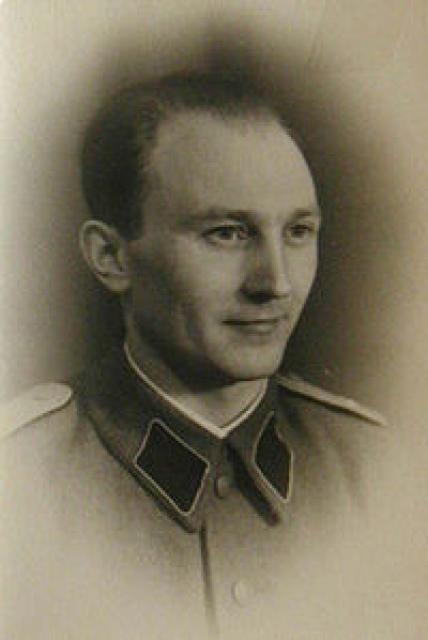
Mikhail Vitushko
 Belarus
- Mikhail Vitushka: Belarusian Nationalist Leader
- Collaboration and Resistance During World War II
- Partisan Activity in Soviet Belarus
- Anti-Soviet Partisan Leadership
- Avoiding Detection and Later Life
Mikhail Vitushka: Belarusian Nationalist Leader
Early Life and EducationMikhail Vitushka was born in the city of Nesvizh, then part of the Russian Empire. He attended the Belarusian Gymnasium in Vilnius and later pursued his studies in Prague and the Warsaw University of Technology. During his student years, Vitushka became actively involved in Belarusian cultural and political organizations.
Collaboration and Resistance During World War II
After the Soviet annexation of Western Belarus in 1939, a significant portion of the local population perceived the Soviet regime as occupational and hostile. Following Germany's invasion of the USSR, many joined the Belarusian Central Council, a government established in occupied Belarus, including Vitushka.
However, some activists of the Belarusian national movement, including Vitushka, soon initiated the formation of the clandestine Belarusian Independence Party (Belarusian: Беларуская Незалежніцкая Партыя) and began preparing an anti-Nazi uprising to resurrect the Belarusian People's Republic. The uprising failed, and most members of the party fled to the West.
Partisan Activity in Soviet Belarus
Meanwhile, the Germans trained specialized units for infiltration into the Soviet rear. In 1944, a group of thirty Belarusians known as "Black Cat," personally led by Vitushka, was airdropped behind the lines of the Red Army, which had completely liberated Belarus during Operation Bagration. Additional groups were also dispatched to the Belovezhskaya Pushcha in 1945. By this time, Vitushka had acquired the military rank of General of the Belarusian People's Republic in exile.
Anti-Soviet Partisan Leadership
Initially, Vitushka's anti-Soviet partisans managed to operate successfully, largely due to the Red Army's poor organization in the rear. In 1945, Vitushka became the leader of the Coordination Center to Combat the Soviet Partisan Movement in Belarus. However, specialized units of the NKVD effectively counteracted anti-Soviet groups in Belarus, and by the mid-1950s, the Belarusian nationalist partisan movement had largely ceased its operations. In the early 1960s, most of the movement's leaders had to flee to the West.
Avoiding Detection and Later Life
Vitushka went into hiding from Soviet intelligence in a number of Western countries and remained undetected, unlike the Ukrainian nationalist leader Stepan Bandera, who was assassinated by a KGB agent in 1959. According to information provided by his son, Vitushka died on April 27, 2006.