Miklos Jancso
 Hungary
- Biography of Miklós Jancsó
- Education and Early Career
- International Recognition
- Later Career and Recognition
Biography of Miklós Jancsó
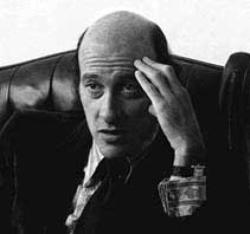
Miklós Jancsó, a Hungarian director and screenwriter, was born on September 27, 1921. In the 1960s and 1970s, Jancsó became synonymous with Hungarian cinema for international audiences.
Education and Early Career
Jancsó studied law at the University of Cluj in Transylvania, while also pursuing ethnography and art history. He received his law degree in 1944. Towards the end of the war, he was mobilized into the army and became a Soviet prisoner. After returning to his homeland, he participated in the youth movement. From 1946 to 1950, Jancsó studied at the Budapest Academy of Theater and Film. After graduating as a director, he worked in newsreels, making documentaries. Notable among them were "On the Outskirts of the City" (1957) and "Immortality" (1959), which focused on the life and work of sculptor Dierdé Goldmann. His first feature film was "Bells Have Gone to Rome" (A harangok romaba mentek, 1958), which explored an anti-fascist theme from a moral perspective. However, it was in his third feature film, "The Round-Up" / "Cantata" (1962), and its follow-up, "My Way Home" (1964), that Jancsó's unique vision of reality, new historical perspective, and elements of unconventional style began to emerge.
International Recognition
Jancsó gained worldwide recognition with his film "The Red and the White" (1967), set during the Russian Civil War. In "Silence and Cry" (1968), he depicted the era of the White Terror that followed the Hungarian Commune of 1919. In Hungary, his film "The Confrontation" (1968) sparked intense debates. His films "Red Psalm" (Meg ker a nep, 1972) and "My Love, Electra" (Szerelmem, Elektra, 1974) received critical acclaim and awards at film festivals in Cannes and Chicago, respectively. In the 1970s, Jancsó directed four films in Italy, exploring rituals of power. In the 1980s, his work focused on the deceptive and mystical nature of politics. In recent years, his films have addressed more contemporary political events. Jancsó began using video techniques to intensify the atmosphere of spatial and temporal blending. While downplaying traditional elements of film structure such as causal-linear plot, dialogue, and genre characterization of characters, he imbued space and rhythm with great dramatic activity.
Later Career and Recognition
Throughout the 1970s, Jancsó and his regular screenwriter explored and depicted the origins and forms of mass popular movements. From 1983 to 1985, he co-directed a theater in Kecskemét with his frequent collaborator, screenwriter and novelist Gyula Hernádi, and playwright László Dürkő. In recent years, Jancsó has worked on a series of documentary films dedicated to Jewish communities and ancient burials. From 1986 to 1991, he served as the president of the Hungarian Filmmakers' Union. Jancsó has also taught at the Budapest Academy of Theater and Film. He is a recipient of awards from the Venice Film Festival (1990) and the Budapest Film Festival (1994) for his contributions to the art of cinema.