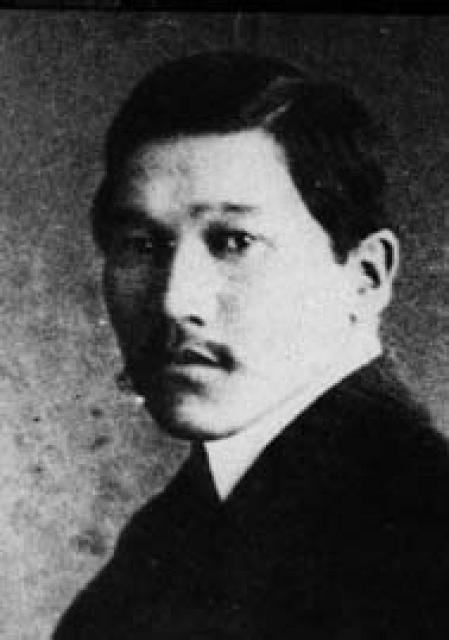
Mir-Yakub Dulatov
 Kazakhstan
- Biography of Mir-Yakub Dulatov
- Early Life and Education
- Literary Career
- Political and Activist Involvement
- Persecution and Legacy
Biography of Mir-Yakub Dulatov
IntroductionMir-Yakub Dulatov, also known as Mirzhakyp Dulatov, was an exceptional poet, writer, journalist, and educator. He was one of the leaders of the "Alash-Orda" party and played a significant role in the revival of Kazakh national consciousness in the 20th century. Born on November 25, 1885, in the village of Sarykopa, Kostanay region, Mir-Yakub Dulatov dedicated his life to promoting education, literature, and the rights of the Kazakh people.
Early Life and Education
Mir-Yakub Dulatov had a challenging childhood, losing his mother at the age of two and his father at twelve. At the age of eight, his father sent him to study with a village mullah who provided little education beyond memorizing Arabic prayers. After two years in a rural school that taught in both Russian and Kazakh, Dulatov attended a Russian-Kazakh school for another two years, eventually earning the title of a rural school teacher.
Literary Career
Dulatov's first poetic experience was published in the first issue of the Kazakh newspaper "Serke" in St. Petersburg. His first poetry collection, "Oyan, Kazakh," was published in 1909 and quickly gained popularity, being reissued in 1911. This collection served as a manifesto and a call to the people of that generation, with Mir-Yakub Dulatov being one of its leading inspirations.
In 1910, Dulatov wrote the first Kazakh-language novel titled "Bakitsyz Zhamal" ("Unfortunate Zhamal"), which depicted the life of an oppressed Kazakh woman sold like property. The novel achieved tremendous success and brought unprecedented fame to Dulatov.
Political and Activist Involvement
Mir-Yakub Dulatov played a crucial role in the Kazakh literary and political scene. He actively contributed to the newspaper "Kazakh," which served as a platform for social and political advocacy and lasted until October 1918. He later wrote an essay dedicated to the life and work of his contemporary, Alikhan Bukeikhanov.
In 1911, Mir-Yakub Dulatov was involved in the creation of the first Kazakh journal, publishing his stories and poems. In 1915, he released another poetry collection called "Terme," which showcased his diverse range of literary skills. After the Russian Revolution, Dulatov continued his work in various editorial departments and pursued writing, even planning a historical study on the Kazakh people.
Persecution and Legacy
In 1928, Mir-Yakub Dulatov was arrested and spent two years in prison before being exiled to the Solovetsky labor camp, where he passed away on October 5, 1935. Despite his hardships, Dulatov left a lasting legacy. He had four grandchildren, and his daughter Gulnar became a doctor.
Mir-Yakub Dulatov's life and literary career were closely intertwined with the "Alash" party and the Alash Orda government. He, along with other intellectuals, recognized the threats of colonization and advocated for education, enlightenment, and the preservation of Kazakh culture and identity.
In his writings, Dulatov criticized the injustices imposed on the Kazakh people, including their exclusion from participation in the State Duma in 1907. He also spoke out against language reforms that sought to change the Arabic alphabet, fearing that it would sever the ties between the Kazakh people and their written history.
Even in the face of an unjust trial, Mir-Yakub Dulatov remained steadfast in his beliefs and declared in his final official statement, "For the future of my people, I am obliged to do everything possible. If I am wrong, I am wrong alongside the people. Sooner or later, the truth will prevail."


