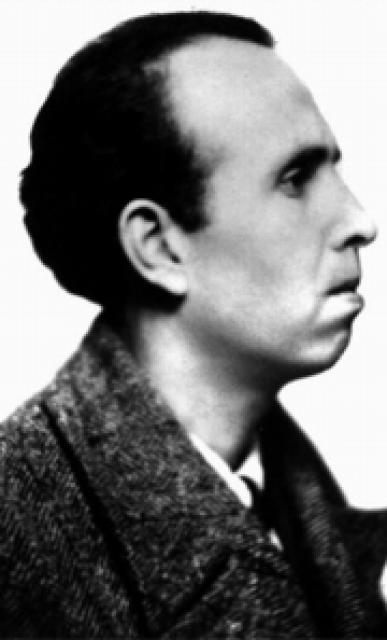
Mishel Pablo
 Greece
- Biography of Michel Pablo
- Post-War Leadership
- Tactics and Criticism
- Focus on Third World Revolutions
- Split and Later Years
Biography of Michel Pablo
Michel Pablo was a Trotskyist figure of Greek origin. He was born in Alexandria, Egypt, into a family of Greek engineers. After graduating from the Athens Polytechnic Institute, he continued his education at the Sorbonne, where he studied urban planning.
Involvement in the Revolutionary Movement
Pablo became involved in the revolutionary movement in the late 1930s and represented the Greek Trotskyists at the founding conference of the Fourth International in Paris in 1938. When World War II broke out, he was seriously ill in Paris, which limited his activities within the French Trotskyist movement until 1944. During this time, he reportedly provided educational activities for the Union of Communist David Korner. In 1944, he became fully immersed in the movement and was elected as the organizational secretary of the European Bureau of the Fourth International. His task was to rebuild the lost contacts between Trotskyist groups in Europe during the war years.
Post-War Leadership
After the war, Pablo became a central figure in the International and enjoyed the support of the Revolutionary Socialist Party (SRP) and James P. Cannon. He played a key role in the reunification of the International at that time, centralizing its activities and defining its strategy. In 1946, Pablo visited Greece, where he facilitated the merger of four Trotskyist groups. The leaders of the Fourth International Secretariat, Pablo and Mandel, initially considered the Eastern European countries liberated by the Red Army in 1944-1945 to still be bourgeois states. This perspective was based on the belief that the destruction of capitalism cannot be achieved from above. However, this position was later revised and the Third World Congress of the Fourth International, held in 1951, recognized the Eastern European countries as deformed workers' states.
Tactics and Criticism
During this time, Pablo proposed the tactic of long-term entryism, known as "entryism sui generis." He argued that only long-term entryism into mass communist and social democratic parties would help the Trotskyist movement avoid isolation. This tactic was criticized by some members of the British Revolutionary Communist Party, led by Jock Haston and Ted Grant. In 1953, the American, British, and French sections of the Fourth International, opposed to the International Secretariat, left the International and formed the International Committee of the Fourth International. They specifically criticized Pablo's entryism tactic, labeling it as "Pabloism."
Focus on Third World Revolutions
In the 1950s and 1960s, Pablo began to pay more attention to revolutionary prospects in Third World countries. By the late 1950s, sections of the International remaining under the leadership of the International Secretariat began to distance themselves from Pablo's entryist tactics. Pablo was heavily involved in the support of the Algerian national liberation struggle against France. He was arrested in the Netherlands on charges of counterfeiting money and smuggling weapons, and his release was organized by Jean-Paul Sartre. After serving a 15-month prison sentence, Pablo went to Morocco. Following the victory of the Algerian Revolution in 1962, Pablo became an advisor to President Ahmed Ben Bella on self-management in rural areas. It was during this time in Algeria that Pablo became acquainted with Che Guevara.
Split and Later Years
In 1963, a reunification congress took place, bringing together the majority of the two tendencies - the International Committee and the International Secretariat of the Fourth International. The Socialist Revolutionary Party (SRP) and James P. Cannon were among the initiators of the reunification. At the unity congress, Pablo presented a counter-resolution that received support from the minority, as well as a resolution on Algeria. Supporters of Pablo gained several positions in the International Executive Committee. However, tensions between Pablo's supporters and the majority of the International continued to grow, and in 1965, they left the organization.
Pablo's central focus in the 1960s and 1970s was workers' self-management. In the early 1970s, he was invited to Chile as an advisor to President Salvador Allende. After the military coup in 1973, Pablo returned to Greece. In the 1980s, he withdrew from active political activities.
After leaving the Fourth International, Pablo organized the Revolutionary Marxist Tendency, which later became known as the International Revolutionary Marxist Tendency (IRMT). This was a small tendency based in France, with organizations in Belgium, Germany, the United Kingdom, Australia, and some Latin American countries. In the early 1990s, the sections of the IRMT reunited with the Fourth International. However, Michel Pablo did not return to the International. His funeral in Greece was given a state status, which was quite unusual for a revolutionary. This was due to his friendly relationship with Andreas Papandreou, who was also a Trotskyist in his younger years.


