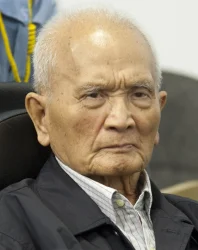
Mohamed Naguib
- Soldier, officer and public figure
- Revolution and the first republic
- A presidency cut short
- Memory and legacy
Mohamed Naguib became the first president of republican Egypt after the 1952 overthrow of King Farouk. A decorated army general with a law degree and a reputation for integrity, he gave the Free Officers movement a respected public leader as it dismantled the monarchy. But his vision for Egypt’s future soon clashed with that of his fellow officers, especially Gamal Abdel Nasser, and his presidency lasted little more than a year.
Soldier, officer and public figure
Naguib was born in Khartoum in 1901, when Sudan was under Anglo-Egyptian rule. He joined Egypt’s Military Academy in 1917 and graduated the following year. He pursued further studies alongside his army career, earning a law degree and postgraduate diplomas in political economy and private law—an unusual path for an Egyptian officer of his generation.
He served in Sudan and held a range of military and administrative posts. During the 1948 Palestine war, he was wounded several times and received military honors. The conflict deepened his criticism of Egypt’s political leadership and of the conditions facing its armed forces. After the war he became director of the Officers’ School, where he developed contacts with younger officers who were organizing against the monarchy.
Revolution and the first republic
On July 23, 1952, the Free Officers seized power and forced King Farouk to abdicate. Naguib became the movement’s senior public face and chairman of the Revolutionary Command Council, the body that governed after the coup. The officers chose a respected general to lead them, but leadership within the movement was shared and contested; Nasser had played a central role in organizing the group and would become its strongest political figure.
Naguib initially held several posts, including prime minister and commander-in-chief. Egypt was declared a republic on June 18, 1953, and he became its first president. His name became closely tied to the end of the monarchy, but the country’s new government was not a return to civilian parliamentary rule: the Revolutionary Command Council had dissolved political parties and concentrated authority in the military leadership.
A presidency cut short
The central conflict was over who would shape the new state and how long the army would remain in power. Naguib favored restoring constitutional politics and returning the armed forces to their barracks, while Nasser and other officers sought a longer transition under the Revolutionary Command Council. The clash became public in early 1954. Naguib resigned in February, but protests and unrest led to his reinstatement as president the following month. Nasser, however, took the premiership and remained chairman of the council.
In November 1954, the council removed Naguib from all his positions and placed him under house arrest. He remained largely absent from public life for years, first under Nasser and then until restrictions were lifted after Anwar Sadat came to power. The man who had led Egypt’s first republican government spent much of the rest of his life away from the national stage.
Memory and legacy
Naguib died in Cairo on August 28, 1984. His place in the history of the revolution has often been overshadowed by Nasser, who dominated Egypt for the following decades. Yet Naguib was more than a ceremonial figure: he served as the movement’s senior public leader, held the first presidency and became the focus of a major debate over whether the revolution would lead to civilian government or military rule.
His story carries both achievement and loss. He helped bring the monarchy to an end and gave the new republic its first president, but he could not prevail in the struggle over who would govern it. The long silence imposed on him after his removal only sharpened the contrast between the promise of political change in 1952 and the authoritarian system that followed.