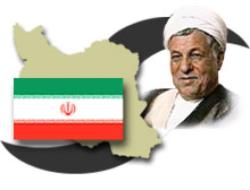
Mohammad Khatami
 Iran
Iran- Mohammad Khatami - Iranian Gorbachev
- An Enlightened Leader
- President Khatami - Iranian Gorbachev
- Teocracy with a "Human Face"
- A Long Road to Reform
- A Dual Standard Society
- The Legacy of Mohammad Khatami
Mohammad Khatami - Iranian Gorbachev
Mohammad Khatami, born in 1943 into a highly respected family of mullahs, served as the fifth President of the Islamic Republic of Iran from 1997 to 2005. His father was a friend and advisor to Imam Ruhollah Khomeini. Following in his father's footsteps, Khatami attended the Shiite Seminary in the city of Qom and became politically active, working towards the overthrow of the Iranian monarchy. He continued his studies at the University of Tehran, becoming one of the most active fighters against the Shah's regime and aligning himself with the leadership of the Islamic Movement. In 1978, he was sent to Hamburg, Germany, as the head of the Islamic Center coordinating the Iranian opposition in Europe. A year later, he returned to revolutionary Iran.

An Enlightened Leader
Khatami gained popularity in the 1980s when he served as Minister of Culture of the Islamic Republic for ten years, as well as the head of military propaganda during the war with Iraq. During this period, he earned a reputation as a cautious liberal. Under his leadership, Islamic censorship was relaxed, and some criticism of the government was allowed. Despite the ban on public speaking by women, he permitted concerts by female singers, albeit exclusively for female audiences, and allowed the sale of Western press in Iran. In the early 1990s, he faced attacks from ultra-radicals accusing him of excessive liberalism and pro-Western sympathies. Ultimately, supporters of Iran's spiritual leader, Ayatollah Khamenei, removed him from his positions at the central newspaper "Kayhan" and as Minister of Culture. Khatami then withdrew from the public eye, serving as the director of the National Library and an advisor to former President Ali Akbar Hashemi Rafsanjani. It is worth noting that during his candidacy for president, he faced competition from 238 other applicants, including nine women.

President Khatami - Iranian Gorbachev
When Khatami came to power on May 23, 1997, he won twice as many votes as his conservative opponent. He received support from the youth and women who voted for him in large numbers. He promised reforms and freedom, and his views noticeably diverged from the ideological stance of Islamic fundamentalists. Just like Gorbachev brought hope to the West for the return of the Soviet Union to the familiar path of the capitalist system, Khatami revived hopes for Iran's return to the international community. His goal was to gradually improve relations with the United States and shed the label of an international pariah. Khatami believed that visits by athletes, artists, journalists, and tourists could break down the wall of misunderstanding between Iran and the rest of the world.
Teocracy with a "Human Face"
During Khatami's presidency, Iran underwent significant changes, which brought noticeable results. The country actively developed cooperation with European states, regional countries, and made progress in its relations with the United States. Iran, the Islamic Republic, was gaining political weight and influence on the global stage.
Khatami himself also transformed during his presidency. He insisted on being called "Mr. President" without the long list of honorary titles that his predecessors bestowed upon themselves. He drove an ordinary car and sought to gain popularity among the people. Compared to other Iranian leaders, he was an open leader, striving to reduce the intervention of the "revolutionary guards" in the personal lives of citizens.
A Long Road to Reform
Khatami faced significant difficulties in overcoming international isolation. Like Gorbachev, he lacked the active support from the West that the Soviet leader had received. However, Khatami took a step that shocked the Iranian establishment - he appointed a woman as Vice President of the country. Massoumeh Ebtekar was tasked with environmental issues. Although the position itself was relatively insignificant, as Vice President, she could influence all government decisions and assist Khatami in resisting opposition.
A Dual Standard Society
During Khatami's presidency, Iran lived with double standards. In affluent parts of northern Tehran, Western-style parties were held, complete with pop music, video screenings of European singers, and dancing. All of this was illegal, but the morality police knew what went on behind closed doors in the villas of the local elite and turned a blind eye. Just a few years earlier, such a violation of Islamic tradition would have resulted in public stonings or executions.
On the other hand, many who supported Khatami's presidency and brought him to power now express disappointment. They believe that the reformist president is acting too hesitantly and inconsistently. The youth, in particular, feel that Khatami is not doing enough to bring about change.
The Legacy of Mohammad Khatami
It is difficult to determine Khatami's true intentions. Perhaps, like Gorbachev, he sought to revitalize and "humanize" the country rather than dismantle its foundations. Khatami, being an integral part of the Iranian theocracy, does not wish for its demise, but his actions could undermine the power of the clerics.
Today, the world watches closely as Iran goes through a period of change, just as it did during the Soviet era. Experts from different countries closely monitor Khatami's attempts to open the country to the world, initiate dialogue between civilizations, and break down the wall of mistrust. The analogy between Iran and the USSR, and Khatami and Gorbachev, is not coincidental. Khatami has long been referred to as the "Iranian Gorbachev." It seems that he aims to transform his country into a normal state governed by secular, rather than religious, laws.
Khatami's presidency brought about significant changes in Iran and had a lasting impact on the country's politics and society. His efforts towards reform and his advocacy for dialogue between civilizations have left a mark on Iranian history. While his presidency faced challenges and criticism, Mohammad Khatami will be remembered as a leader who sought to bring progress and openness to his country.