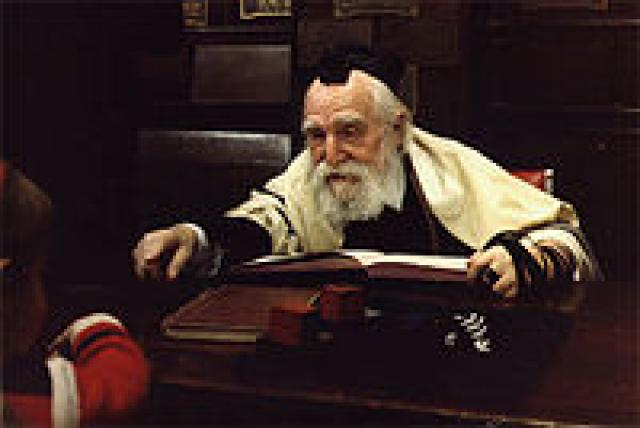
Moshe Faynshtein
 USA
USABiography of Moshe Feinstein
Moshe Feinstein, the greatest halachic authority of the 20th century, was a prominent figure in American Judaism. He was born into the family of Rabbi Uzda Rava David Feinstein on the day of the birth and death of Moses, and was named in his honor. Moshe studied under his father and in yeshivas in Slutsk, Shklov, and Mstislavl under Rabbi Iser Zalman Melcer.
After completing his studies, he was appointed as a rabbi in Luban and then in his hometown of Uzda. However, after the establishment of Soviet power, he faced persecution as a representative of religion. Despite this, Rabbi Moshe did not cease his activities and continued to preserve all Jewish rituals in the community and throughout the region. As one of the few rabbis in the region, he received questions from many communities in Belarus.
In 1936, thanks to the efforts of his relatives, he obtained permission to emigrate to the United States. He settled in Manhattan, New York, and was appointed as the head of the Yeshiva "Tiferet Yerushalayim". From this time, the fame of this yeshiva grew, attracting students from all major Jewish communities in America.
In 1943, he participated in the "Rabbis' March," demanding a meeting with the American president and his intervention in the destruction of European Jews. Rabbi Feinstein's literary activities were particularly fruitful and he was known for his innovative approach, touching on all aspects of technological progress, demonstrating remarkable erudition.
Rabbi Feinstein led the Orthodox rabbis' association and the Council of Agudath Israel starting from the 1960s. Many prominent rabbis, such as Rabbi Yosef Shalom Eliashiv, Rabbi Yaakov Yisrael Kanievsky, Rabbi Aharon Kotler, and others, began to recognize Rabbi Feinstein as an outstanding rabbi of his generation.
Rabbi Moshe passed away in 1985 in New York and was buried in Jerusalem at the Har Hamenuchot cemetery. His works, "Igrot Moshe," a collection of his responses to letters sent to him with halachic questions covering all aspects of life, from abortions to the use of technological innovations on Shabbat, are highly regarded.




