Nadia Boulanger
 France
- Biography of Nadia Boulanger
- Early Life and Education
- Conducting Career
- Relationship with Lili Boulanger
- Composer and Educator
Biography of Nadia Boulanger
Nadia Boulanger was an outstanding French composer, conductor, and educator. Under Boulanger's guidance, many composers of the 20th century received advanced training, and a new school of music theory emerged.
Early Life and Education
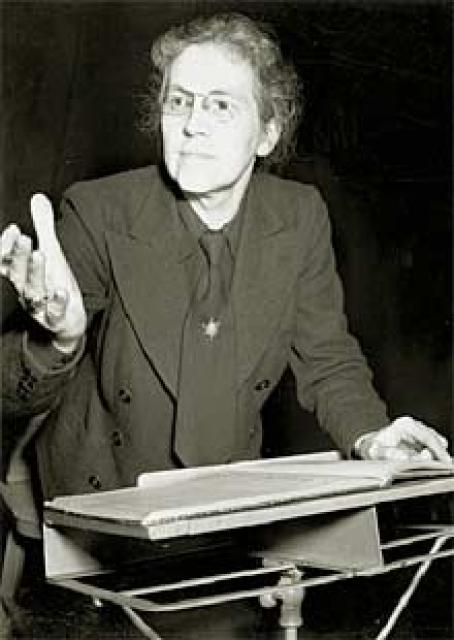
Nadia Boulanger was born and raised in Paris, France. Even in her childhood, she showed her first student - her younger sister, Lili, who was six years her junior. Thanks to her innate teaching talent, Lili Boulanger became the first woman in history to win the Prix de Rome in 1913. At the age of ten, Nadia Boulanger entered the Paris Conservatory, where she excelled in organ playing, accompaniment, and music theory, becoming the top student in many disciplines. In 1908, after two unsuccessful attempts in the past, she won the Second Prix de Rome. Her composition submitted for the competition caused a scandal - it was a part for a string quartet instead of the required vocal fugue. Despite protests from several judges, Nadia Boulanger still placed second. She never participated in the competition again.
Conducting Career
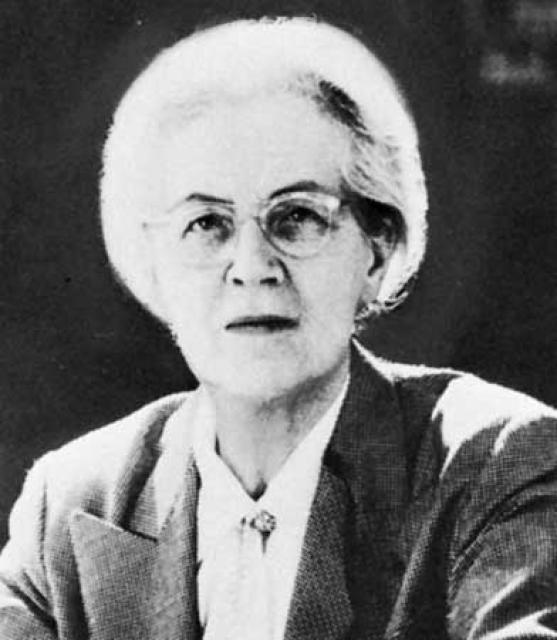
In 1912, Nadia Boulanger made her conducting debut. She went on to become the first woman to lead several leading symphony orchestras, including the New York Philharmonic, Boston Symphony Orchestra, Philadelphia Orchestra, as well as the Hallé Orchestra from Manchester and the BBC Symphony Orchestra in England. During her first tour of America, Boulanger premiered Aaron Copland's "Symphony for Organ and Orchestra."
Relationship with Lili Boulanger
The relationship between Nadia and Lili Boulanger was unconventional. Despite her love for her sister, Nadia always felt overshadowed by her sister's compositional abilities. Once, Nadia Boulanger stated, "If there is one thing I am sure of, it is that my music is useless." Ten years passed between Nadia's admission to the conservatory and her second-place finish in the grand prize. On the other hand, Lili managed to win the first prize after only one year of studying at the conservatory, and by an overwhelming majority of votes. After Lili's death in 1918, Nadia never composed music again. Despite her sister's request to complete her unfinished works, Nadia never did so, considering her abilities inadequate.
Composer and Educator
Nadia Boulanger's compositional legacy consists of a large number of vocal compositions, including over 30 songs, as well as several chamber music works and a rhapsody for piano and orchestra. In the rhapsody, written by Raoul Pugno, with whom Nadia Boulanger worked for ten years, the composer made so many revisions due to her lack of self-confidence and heightened self-criticism that the piece became almost unplayable. In collaboration with Pugno, Boulanger also wrote a song cycle and an opera called "Dead City." The premiere, planned for 1914, did not take place due to the outbreak of World War I, and the opera has yet to be performed.
In 1921, shortly after the end of World War I, Nadia Boulanger was appointed as a teacher at the American Conservatory in Fontainebleau, where she became the director in 1948. During World War II, Boulanger relocated to the United States, where she taught music in colleges.
Boulanger's teaching methodology, in addition to traditional disciplines, included memorizing both volumes of Bach's "Well-Tempered Clavier," and students were also required to learn to improvise in the form of a fugue. Many of Nadia Boulanger's students, who studied in the 1920s, such as Aaron Copland, Darius Milhaud, Walter Piston, Roy Harris, and Virgil Thomson, formed a new school of composition. Emphasizing the enormous significance of Boulanger's legacy, Thomson once stated, "In every city in the United States, there is undoubtedly a department store and a student of Boulanger."