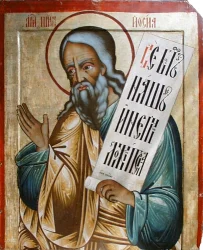
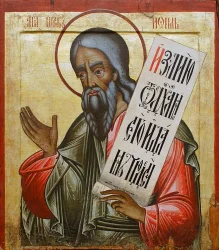
Nahum
Nahum is remembered through a short, forceful book that announces the fall of Nineveh, capital of the Assyrian Empire. The prophet’s personal story is almost entirely unknown: the text names him as an Elkoshite but supplies no family history or career narrative. His voice, however, is unmistakable. He turns the anticipated collapse of an empire that had terrorized the region into a poem of judgment, relief, and political hope for Judah.
A prophet in Assyria’s shadow
The Book of Nahum was written during the final decades of Assyrian power. It refers to the fall of Thebes in Egypt, which Assyria captured around 663 BCE, as a warning that even a formidable city could be conquered. At the same time, Nineveh’s destruction is still presented as a future event. This places the book’s setting broadly between 663 and 612 BCE, the year a coalition of Babylonians and Medes captured Nineveh.
Nahum’s hometown, Elkosh, cannot be identified with certainty. Later traditions have placed it in several different regions, including Galilee, Judah, and areas near Nineveh. The title “the Elkoshite” may identify his birthplace or the community with which he was associated, but it does not settle the question. Beyond this designation, the book offers no reliable details about his family or personal life.
The poem against Nineveh
The book is arranged as a series of poems and prophetic oracles. It begins with a meditation on divine power and justice, then turns toward Nineveh’s military defeat. The city is depicted as a center of violence, conquest, and exploitation. Nahum’s language is vivid and kinetic: shields flash, chariots race through streets, and the city’s defenses collapse. The prophecy draws on the experience of peoples who had lived under Assyrian expansion and deportation.
For Judah, the fall of Nineveh meant the weakening of the empire that had dominated the region and threatened its neighbors. Nahum’s poem imagines the end of that oppression as a reason for celebration. Its message is not simply a prediction of military events; it gives political meaning to them, framing the downfall of an imperial power as a reversal of injustice.
The work also reflects the violence of its world. Its imagery of siege, slaughter, and humiliation can be disturbing to modern readers, even as it answers to the brutality inflicted by Assyria. Nahum’s celebration is rooted in the hope that an empire built on coercion can be brought to an end. The text’s emotional force comes from holding that hope alongside the terrible means by which ancient warfare was waged.
Place in scripture and memory
The Book of Nahum is part of the collection known in Jewish tradition as the Book of the Twelve, and it is counted among the Minor Prophets in Christian Bibles. “Minor” refers to the book’s length, not its importance. Its compact poetry has been admired for its rhythm, striking imagery, and concentrated argument.
Nineveh fell in 612 BCE, fulfilling the historical setting toward which the book points. Yet the poem’s influence rests on more than its connection to that event. It became a lasting reflection on the vulnerability of imperial power and the desire of oppressed communities to see justice prevail. Because the prophet’s biography is lost, Nahum is known chiefly through the words attributed to him: a fierce poetic witness to the end of Assyria’s dominance.