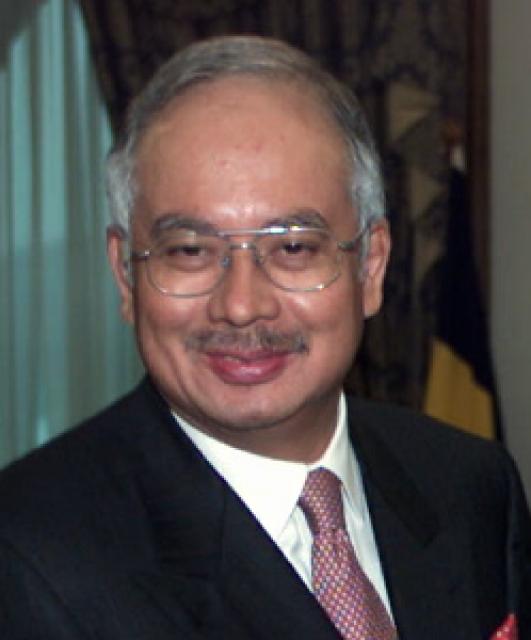
Najib Razak
 Malaysia
Biography of Najib Razak
Najib Tun Razak, the current Prime Minister of Malaysia, has a challenging task ahead of him. In April 2009, he was appointed as the Deputy Prime Minister of the country by the King of Malaysia. This appointment followed the resignation of the previous Deputy Prime Minister, Abdullah Ahmad Badawi, who had allowed opposition parties to dominate the Malaysian Parliament through a series of careless political moves. Additionally, Badawi had failed to address key issues such as corruption and judicial reform. In this crucial situation, Najib Tun Razak assumed the role of Prime Minister, while Badawi was relieved of his duties by the King.
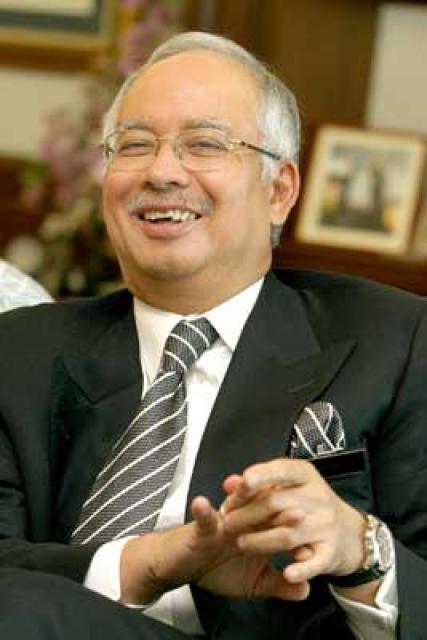
Early Life and Political Career
Najib Tun Razak was born on July 23, 1953, in Kuala Lumpur, the capital city of Malaysia. As is often the case in Eastern countries, Najib did not come from an ordinary background in the country's governing structures. His father, Abdul Razak, served as the second Prime Minister of Malaysia, and his uncle, Hussein Onn, held the position of the third Prime Minister. It seems that future ministers in the ruling families of Eastern countries are groomed from a young age. Najib's career trajectory confirms this assumption. He graduated from the prestigious University of Nottingham in the United Kingdom in 1974, and by 1976, he became a Member of Parliament representing the leading political party in Malaysia, UMNO. Najib became the youngest MP in the history of Malaysia. Thanks to his activism and excellent education, in 1978, Tun Razak was appointed as the Deputy Minister of Energy, Telecommunications, and Posts. In 1993, he became one of the six Vice Presidents of UMNO, and before his appointment as Prime Minister, he held positions such as Minister of Defense and Minister of Finance in Malaysia.
Unconventional Initiatives
Najib Tun Razak is known for his unconventional political decisions. Some of these decisions have been met with surprise and amusement from around the world. For instance, in 2006, he conceived the idea of equipping Kuala Lumpur, the capital of Malaysia, with state-of-the-art public toilets. This initiative aimed to enhance the tourist experience, as tourism is one of the most crucial sectors for Malaysia's economy. The initiative, known as the "toilet revolution," involved both firm policies and incentives. On one hand, the government imposed hefty fines for improper use of the facilities and littering. On the other hand, the first-ever National Toilet Expo was organized in Malaysia. As a result, the city's toilets were equipped with automatic seat dryers, automatic disinfection systems, and automatic deodorizers. However, now that Najib Tun Razak has assumed the role of Deputy Prime Minister, he will be dealing with more serious and significant matters than the "toilet revolution." He has already developed a program to revive Malaysia's economy during the global crisis. He plans to address the issue of interethnic tensions, which have become increasingly relevant due to the influx of immigrants from China and India. Additionally, Najib Tun Razak intends to strengthen the government's anti-corruption policy. With his proven ability to achieve goals within set time frames, he is likely to succeed in these endeavors.


