Naum Korgavin
 USA
USA- Early Life and Education
- Literary Recognition and Political Persecution
- Siberian Exiles and Return
- Underground Poetry and Conflict with the Authorities
- American Exile and Later Years
- Pseudonym and Legacy
Early Life and Education
Naum Korzhavin, a notable Russian poet, prose writer, translator, and playwright, was born in Kyiv into a Jewish family on October 14, 1925. From a young age, he developed a passion for poetry. He attended a school in his hometown, but was expelled due to conflicts with the administration.
Literary Recognition and Political Persecution
Despite the setback, Korzhavin's talent was recognized by prominent poet Nikolai Aseyev, who introduced him to Moscow's literary circles. With the onset of World War II, Korzhavin evacuated from Kyiv. He attempted to enlist in the army but was denied due to his severe nearsightedness.
In 1944, Korzhavin arrived in Moscow and sought admission to the Literary Institute named after A. M. Gorky, unsuccessfully initially. He eventually gained admission in 1945 and lived in the dormitory with other literary figures such as Rasul Gamzatov and Vladimir Tendryakov. However, in 1947, amidst Stalin's campaign against cosmopolitanism, Korzhavin was arrested and spent eight months in solitary confinement.
Siberian Exiles and Return
The young poet was charged as a "socially dangerous element" and sentenced to exile in Siberia. He spent three years in the village of Chumakovo and later in Karaganda from 1951 to 1954, where he completed his education as a mining technician.
After an amnesty in 1954, Korzhavin returned to Moscow, where he was rehabilitated in 1956. He resumed his studies at the Literary Institute, graduating in 1959. During this period, he supported himself through translations and began publishing his own poetry during the Thaw period.
Underground Poetry and Conflict with the Authorities
In 1963, Korzhavin published his first poetry collection, "Years," compiling works from 1941 to 1961. He also saw the production of his play "Once in the Twentieth" at the K. S. Stanislavsky Theater in 1967. Despite official recognition, Korzhavin's writing also had an underground aspect, with many of his poems circulating in samizdat form.
His vocal defense of dissidents and opposition to the Soviet regime led to the banning of his works. As tensions escalated, Korzhavin applied for an exit visa in 1973, citing a "lack of air to breathe."
American Exile and Later Years
Korzhavin immigrated to the United States, settling in Boston. He joined the editorial board of "Continent" magazine and continued his poetic work. In 1976 and 1981, he published "Times" and "Intertwining" in Frankfurt, West Germany.
Following the perestroika era, Korzhavin gained the opportunity to visit Russia for poetry readings. He famously visited Moscow in the late 1980s at the invitation of fellow poet Bulat Okudzhava. Despite his impaired vision, Korzhavin's recitals were met with standing ovations and enthusiastic support.
Pseudonym and Legacy
Korzhavin was known among his acquaintances by the nickname "Emka," a diminutive of Emmanuel. However, it remains uncertain whether this was his actual name. Credible sources, such as "Russian Writers of the 20th Century," indicate his given name as Naum. It is likely that both "Emka" and "Emmanuel" were invented aliases.
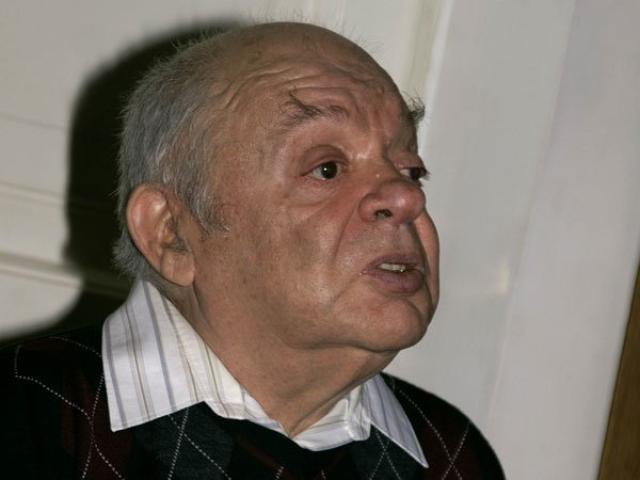
Naum Korzhavin is remembered as one of the heroes featured in the documentary film "They Chose Freedom" (RTVi, 2005). His contribution to Russian literature continues to be celebrated both in his native country and abroad.