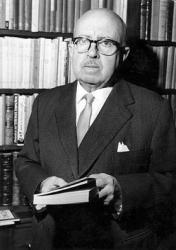
Nicolas Krasso
 Hungary
- Miklós Krassó: A Hungarian Marxist Philosopher and Political Activist
- The Hungarian Revolution of 1956
- Academic Career and Left-Wing Activism
- Marxist Scholarship and Influence
- Enduring Legacy
Miklós Krassó: A Hungarian Marxist Philosopher and Political Activist
Early Life and Political InvolvementMiklós Krassó (1930-1992) was a Hungarian-British philosopher, poet, translator, and political activist of Jewish descent. As a young man, he joined the Hungarian Communist Party in 1945 and gained prominence for his anticlerical writings. With the support of the renowned Marxist philosopher, György Lukács, he studied philosophy at Budapest University and became an active member of his circle.
The Hungarian Revolution of 1956
During the Hungarian Revolution of 1956, Krassó played a key role as an anti-Stalinist leftist. He helped organize resistance and was elected a delegate to the regional revolutionary council. However, his efforts to negotiate directly with Soviet forces were unsuccessful. After the suppression of the revolution, he was forced into exile in Austria and eventually settled in the United Kingdom.
Academic Career and Left-Wing Activism
In the UK, Krassó enrolled at Oxford University and became involved with the New Left movement. He joined the editorial board of "New Left Review" in 1965 and translated Attila József's poetry into English. He also became involved in the anti-university movement and met his second wife, a Palestinian woman.
Marxist Scholarship and Influence
Krassó's scholarly work focused on the early writings of Marx and Trotsky, the theory of ideology in Marxism, and the work of István Bibó. He engaged in a famous polemic with Ernest Mandel over Trotsky's Marxism, which was published as a book. Krassó's writings have had a significant impact on left-wing thought and activism in Europe and beyond.
Enduring Legacy
Miklós Krassó's untimely death cut short a brilliant career. As a philosopher, poet, translator, and political activist, he left an enduring legacy of Marxist thought, left-wing activism, and cultural exchange between Hungary and the UK. His work continues to inspire and provoke generations of scholars and activists committed to social justice and human liberation.