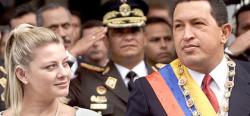
Romulo Betancourt
 Venezuela
- Romulo Betancourt: A Venezuelan Statesman
- Exile and Communist Affiliation
- Return to Venezuela and Opposition Leadership
- Presidency and Progressive Reforms
- Cold War Politics
- Post-Presidency and Legacy
Romulo Betancourt: A Venezuelan Statesman
Early Life and Political ActivismRomulo Betancourt was born on February 22 in Guatire, Miranda State, Venezuela. He pursued a law degree at the Central University of Caracas. His political activism began during his student years, where he actively protested against the dictatorship of Vicente Gomez. In February 1928, he was imprisoned for his involvement.
Exile and Communist Affiliation
After his release, Betancourt participated in an uprising that ended in exile. In 1930, he briefly joined the Communist Party in Costa Rica, which he later characterized as a "childhood ailment" that provided lifelong immunity against the ideology.
Return to Venezuela and Opposition Leadership
In 1936, following the death of the dictator, Betancourt returned to Venezuela and established the Democratic Action Party, an opposition group of which he became a prominent leader. In October 1945, he participated in the overthrow of General Isaias Medina Angarita, leading to the Democratic Action Party's rise to power.
Presidency and Progressive Reforms
Betancourt served as the President of Venezuela for two terms, from 1945-1948 and 1959-1964. During his tenure, he implemented significant progressive policies, including social security programs, land distribution to farmers, education reforms, and encouraging foreign investment. He also aimed to diversify the country's oil-dependent economy.
Cold War Politics
Betancourt adhered to an anti-communist stance and banned the Communist Party in 1962. He strongly opposed socialist Cuba and proposed the "Betancourt Doctrine," urging Latin American nations to sever diplomatic ties with non-democratically elected governments.
Post-Presidency and Legacy
As per the constitution, Betancourt did not seek a second consecutive term. He was succeeded by Raul Leoni in March 1964 and passed away in New York City on September 28, 1981. Betancourt is remembered as a prominent Venezuelan statesman and a key figure in the country's democratic history.