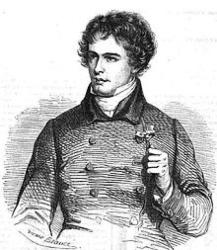
Nicolas Thomas Baudin
 France
Nicolas Thomas Baudin was a French naval officer, captain and naturalist whose last voyage transformed the mapping of Australia’s southern and western coasts. A seafarer drawn to the natural sciences, he led a multinational team of scientists and artists on a difficult expedition that brought back vast collections and left a lasting imprint on Australian maps. His achievements were long overshadowed by bitter disputes within the expedition, but later histories have restored his place among the era’s major explorers.
A sailor turned naturalist
Born on the Île de Ré in 1754, Baudin began his working life at sea, first in merchant vessels and then in the French navy. During the American War of Independence he served in the Atlantic and was captured twice by the British. He later returned to merchant shipping, where a chance meeting with Austrian botanist Franz Boos introduced him to the challenges of collecting and transporting plants and animals.
That experience shaped a second career. Baudin led scientific voyages in the Indian Ocean and to the West Indies, gathering natural history specimens for European collections. His 1796 expedition to Trinidad and Puerto Rico returned with collections that earned him renewed standing in France and reinstatement in the navy as a post-captain. He then proposed a much wider voyage of discovery.
The expedition to New Holland
In 1800, the French government appointed Baudin to lead an expedition to chart New Holland, as Australia was then known to Europeans, and conduct scientific investigations. The Géographe and the Naturaliste sailed from Le Havre in October with a team of scientists and artists. The ships explored the western coast, Tasmania and the southern mainland, recording geography and collecting specimens.
The expedition faced storms, shortages, illness and conflict among its officers and researchers. Baudin’s strict command style and strained relationships led some members to leave. In April 1802, near what became known as Encounter Bay, he met British explorer Matthew Flinders, who was charting the same coast from the opposite direction. Though the French did not reach every stretch they had hoped to survey, their charts and observations significantly advanced European knowledge of the coastline. Baudin later circumnavigated Kangaroo Island, and French names from the voyage remain visible across South Australia.
An unfinished homecoming
After a period in Sydney to repair and resupply, Baudin resumed surveying with the Géographe and a smaller vessel, the Casuarina. His health deteriorated, and in July 1803 he turned the expedition toward home. He died of pulmonary illness in Mauritius that September, before the ships returned to France.
Because Baudin died before the voyage’s account was published, its narrative was chiefly prepared by naturalist François Péron and later by Louis de Freycinet, amid personal disputes and political change. That early record diminished the commander’s role. Modern scholarship has emphasized the expedition’s cartographic and scientific accomplishments, including its collections, coastal surveys and documentation of encounters with Aboriginal communities. Baudin’s name endures in the geography and history of Australia’s southern coast.