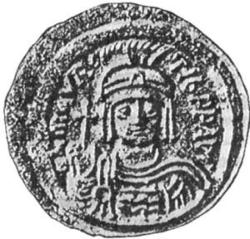
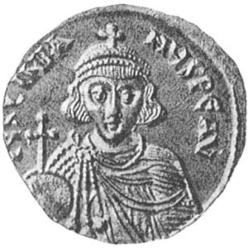
Nikifor II
 Greece
- Early Life and Military Career
- Conquest of Crete (960-961)
- Rise to Power
- Imperial Rebellion and Coronation
- Reign as Emperor (963-969)
- Overthrow and Assassination
Early Life and Military Career
Nicephorus Phocas (c. 912-969) was born into the illustrious Phocas family, renowned for producing prominent military leaders in the Byzantine Empire. From a young age, he participated in numerous battles, eventually rising to the position of Strategos of Anatolic in 954. Emperor Constantine VII later appointed him Domestic of the Schools.
Throughout his career, Phocas developed a reputation for his unwavering resilience, military expertise, and austere lifestyle. He adhered to a strict ascetic regimen, wearing a hairshirt and abstaining from meat. According to the historian Leo the Deacon, he never succumbed to sensual pleasures and remained unscathed by allegations of debauchery.
Conquest of Crete (960-961)
Empress Theophano, wife of Emperor Romanos II, entrusted Phocas with the command of an expedition against the island of Crete. For over a century, this island had been under the control of Arab pirates, and previous imperial attempts to reclaim it had met with heavy losses.
In 960, Phocas gathered his forces in Asia and set sail for Crete with a fleet equipped with fire-throwing ships. The Arabs did not oppose the Byzantine landing but awaited them near their capital, Chandax. Phocas ordered his soldiers to form a solid shield wall and advanced directly upon the enemy.
A fierce battle ensued, but the Byzantine spearsmiths proved invincible. The Arab ranks crumbled, forcing them to flee. The victorious Byzantines pursued the retreating Arabs into the city fortifications.
After surveying the fortress and recognizing its impregnability, Phocas ordered the construction of a wall that stretched from the southern shore to the opposite side of the island, effectively trapping the main Arab army within Chandax. Through local informants, he learned of an enemy force gathering elsewhere on the island to attack him from behind.
Dividing his forces, Phocas marched against the Arab army with a detachment while the rest maintained the siege. Catching the enemy off guard, the Byzantines attacked their camp at night, slaughtering every last man. Phocas had their severed heads impaled on spears around Chandax and flung at the city walls by catapults.
The sight of countless heads atop the spears and flying over their city wall instilled terror and despair into the hearts of the besieged Arabs. Deprived of any hope of rescue, they realized their fate lay in their own hands.
In springtime 961, the Byzantines deployed siege towers and simultaneously excavated a tunnel beneath the city's foundations. The sandstone walls succumbed to their efforts, collapsing shortly after. Phocas's soldiers surged through the breach into a devastated Chandax. They massacred the population and plundered its riches.
To consolidate Byzantine control, Phocas ordered the destruction of Chandax's walls and the construction of a fortress named Temenos on a nearby hilltop. He returned to Constantinople in triumph with 300 ships laden with spoils of war.
Rise to Power
After Crete's conquest, Romanos II commissioned Phocas to campaign against Sayf al-Dawla, a longtime Byzantine adversary. Phocas swiftly seized several of al-Dawla's cities until news of Romanos's sudden death reached him.
With the emperor's demise, power shifted to his young sons, Basil and Constantine, under the regency of their mother, Theophano, and the parakimomenos Joseph Bringas. Phocas, who had long harbored ambitions of ruling, seized the opportunity.
In April 963, supported by the Patriarch Polyeuctus, Phocas was declared Autokrator-Strategos of Asia. Before the patriarch and the synclitus, Phocas swore allegiance to the minor emperors and pledged not to harm their authority.
Imperial Rebellion and Coronation
Despite his vows, Phocas secretly planned to rebel. He had fallen deeply in love with the Empress Theophano and initiated a clandestine affair with her. In late April, Phocas departed for his army in Cappadocia.
Bringas, suspecting Phocas's treachery, dispatched a letter to John Tzimiskes, Strategos of Anatolic, urging him to take command of the army. As an incentive, Bringas promised Tzimiskes the highest office in the state.
However, Tzimiskes was not tempted by such promises. He delivered Bringas's letter to Phocas, exposing the parakimomenos's schemes. Tzimiskes advised Phocas to seize the imperial throne immediately, but the general hesitated.
Tzimiskes then rallied the army leaders. They surrounded Phocas's tent, drew their swords, and acclaimed him emperor. The soldiers unanimously supported their choice, and Phocas donned the imperial robes. Tzimiskes was rewarded with the rank of magister and appointed Domestic of the East.
Phocas dispatched edicts and appointments throughout the empire and sent a message to the patriarch and the synclitus, demanding their recognition as sole sovereign. He promised to care for Romanos's sons and raise them to adulthood.
As Phocas's army approached the capital, Bringas sought refuge in Hagia Sophia before being sent into exile. Riding a white horse, Phocas entered Constantinople through the Golden Gate and was crowned emperor by Patriarch Polyeuctus in Hagia Sophia.
Reign as Emperor (963-969)
On September 20, Phocas openly married Empress Theophano, causing widespread disapproval due to their perceived spiritual kinship. Patriarch Polyeuctus excommunicated Phocas and forbade him from receiving communion.
Phocas managed to quell the scandal with the help of the Protoiereus of the Great Palace, Stilianos, who claimed that Phocas had not acted as godfather to any of Romanos's sons. Despite the public's knowledge that Stilianos lied, Polyeuctus relented and recognized the marriage as legitimate.
Phocas dedicated most of his reign to military campaigns. He led successful expeditions against the Arabs, capturing numerous cities, including Tarsus and Antioch.
Preoccupied with his eastern conquests, Phocas neglected the western borders. After Tsar Simeon's death, Bulgaria weakened, but Hungarian raids continued to plague the Byzantine Empire. Phocas urged Tsar Peter of Bulgaria to prevent Hungarian crossings of the Danube, but Peter refused.
Determined to neutralize Bulgaria, Phocas contacted the Kievan Rus' Prince Svyatoslav. With promises of rich rewards, he persuaded Svyatoslav to launch two devastating invasions of Bulgaria, weakening the kingdom significantly.
In 968, Phocas again besieged Antioch before venturing deeper into Phoenicia and capturing the city of Arca. On his return journey, he constructed a fortress near Antioch, leaving a garrison of 2,000 troops.
In springtime 969, this detachment finally seized control of Antioch, marking Phocas's last military triumph.
Overthrow and Assassination
Phocas's reign culminated in a bloody coup orchestrated by those who had helped him ascend to the throne: John Tzimiskes and Theophano. Tzimiskes had earlier been dismissed from his post as Domestic and exiled to Chalcedon.
Theophano convinced her husband to recall Tzimiskes from exile and later conspired with him to overthrow Phocas. Murdering the emperor proved challenging as his palace was heavily fortified.
With Theophano's collaboration, Tzimiskes devised a plan. He sent two burly soldiers to the empress's chambers under various pretenses. She concealed them within her apartments. Late that night, a boat carrying conspirators approached the palace from the Bosporus side.
The soldiers hidden in Theophano's rooms hauled the conspirators into the palace on ropes. The empress left her husband's bedroom door unlocked as she departed. The conspirators stormed into Phocas's chamber and brutally beat him. One struck a fatal blow to his head with a sword.
The bleeding emperor was dragged before Tzimiskes. The new emperor seized Phocas's beard and mercilessly yanked it, while others beat him with sword hilts and broke all his teeth. Satiated with torment, Tzimiskes kicked Phocas in the chest, raised his sword, and split his skull in two.
Phocas's severed head was paraded through the streets, while his body was cast out into the open. It lay unattended for an entire day in the snow. Eventually, Phocas's remains were placed in a hastily constructed coffin and buried in the Church of the Holy Apostles.