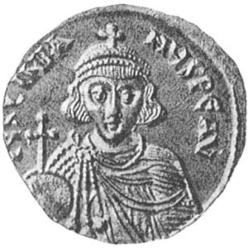
Andronik II
 Greece
- Biography of Andronikos II Palaiologos
- External Wars and Internal Disorders
- Disastrous Wars and Rebellion
- Rebellion and Abdication
Biography of Andronikos II Palaiologos
Andronikos II Palaiologos was the Byzantine Emperor from 1272 to 1328. He began his independent rule in 1282 by reconciling the church and organizing church affairs, which had been tangled by his father. He allowed all opponents of the union, who had suffered persecution under Michael, to return from exile. Patriarch John Bekkos, who had been most enthusiastic about the church's union, voluntarily abdicated and secluded himself in the monastery of Parakrantos.
External Wars and Internal Disorders
External wars and internal disorders became the main concerns of Emperor Andronikos II throughout his reign, revealing the crisis and weakening of the state, which had previously gone unnoticed during his father's reign. The most significant problem for the empire was the rapid and complete collapse of the Roman army, for which Andronikos himself was primarily to blame. In the early years of his rule, his advisors convinced him to reduce expenses on the fleet, as the threat from Charles and Italy had subsided. This decision proved fatal as the Romans soon became unable to defend themselves not only from the Venetians and Genoese but also from pirates, who significantly increased their activities and became a threat to all islands and coastal cities.
Furthermore, after the rebellion led by Philanthropinos in Asia, Andronikos became suspicious of the Roman army. According to Gregory, some Roman leaders were unjustly suspected, while others were met with indifference by the emperor. Andronikos showed a preference for using mercenaries, but this choice proved to be short-sighted. The national Roman army soon ceased to exist, and mercenaries became a real disaster for the state. It seemed as though the emperor had invited the enemies into the country rather than keeping them at the borders.
Disastrous Wars and Rebellion
In the war against the Turks, Andronikos initially hired 10,000 Alans. To equip and arm them, he imposed heavy taxes on the entire country. However, the Alans fled at the first sign of battle, and later their raids and robberies turned Asia into a desert. The Turks took advantage of this situation and consolidated their positions along the coast. In 1303, the emperor hired 2,000 Catalans led by Roger de Flor. As soon as this famous condottiere arrived in Constantinople, Andronikos married off his niece Maria to him and appointed him as the grand duke and later the Caesar. The financial costs of clothing, gifts, and annual maintenance for the Catalans were enormous, depleting the state treasury in a short time.
After defeating the Turks in the battle of Philadelphia, Roger inflicted a severe blow to them and pushed them back beyond the old borders of the empire. However, it was soon reported that the mercenaries were committing atrocities in the conquered cities. Andronikos knew about this, but he could do nothing since his own troops were too weak. After plundering all of Asia, Roger crossed into Thrace. In 1305, he was killed on the orders of Michael, Andronikos' son. However, his death marked the beginning of even greater calamities. The Catalans massacred all Romans in Callipolis and turned it into their refuge. From there, they launched raids on Thrace, pillaging it day and night. Michael's army suffered a devastating defeat against them near Adrianople. When the Catalans left the region, the Turks began ravaging the country, raiding and taking over whatever was left intact.
Rebellion and Abdication
In 1320, Michael died unexpectedly, leaving behind his son, Andronikos II's grandson, also named Andronikos. The young man proved to be wayward, and his grandfather initially doted on him but eventually tried to imprison him due to his intolerable vices. In 1321, Andronikos the Younger fled to Thrace and started a rebellion. Promising tax exemption to all Thracian cities, he quickly gathered a huge army under his banner. Since the emperor realized that the city's populace would not remain peaceful and would revolt upon seeing the rebels at the gates, he made significant concessions. It was agreed that Andronikos the Younger would rule Thrace and Macedonia with absolute power, while the old emperor retained the capital, surrounding areas, islands, and the right to receive foreign envoys.
Due to the loss of revenue caused by the secession of northern territories, Andronikos had to sell the jewelry of ancient emperors to raise funds. In 1325, Andronikos the Younger made a second attempt to approach the capital with his Thracian army, compelling his grandfather to declare him co-ruler and crown him as the emperor. In 1328, the third civil war erupted. Near Mavropotamos, the Thracians defeated the forces of the capital, leading the common people, synclitics, and even Andronikos II's close associates to switch sides. The guards opened the city gates for the victor. In the deep of night, the old emperor suddenly heard noise and cries, jumped out of bed, and called for help, but nobody came to his aid. Realizing that he had been betrayed, he desperately clung to an icon of the Virgin Mary. Andronikos prepared himself for the worst, but his grandson entered his chambers, embraced, and kissed him. The old man was allowed to keep the symbols of imperial power, remain in his quarters, but was completely excluded from affairs. Suffering from grief, Andronikos lost his former vigor and gradually lost his sight in both eyes. His servants and slaves tormented him with sharp remarks and shameless insults, turning him into a laughingstock.
In 1328, Andronikos III fell severely ill, and everyone expected his death. The old man was forced to abdicate his imperial power and become a monk. He died four years later in poverty and extreme need.