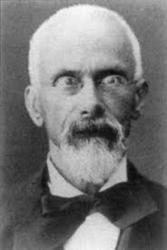
Nikola Karno
 France
- Biography of Nicolas Carnot
- Early Life and Education
- Political Career
- His grandson, Marie François, became the President of France in 1887.
Biography of Nicolas Carnot
Nicolas Carnot (1753-1823) was a French mathematician and member of the Paris Academy of Sciences (1796). He had a diverse political career, serving as a member of the Legislative Assembly (1791-92), the National Convention (1792-95), and the Committee of Public Safety (1793-94). He was also a member of the Directory from 1795-97. During the "Hundred Days" in 1815, he served as the Minister of the Interior and was granted the title of Count.
Early Life and Education
Carnot was born into a family of notaries and received his education at the School of Military Engineers in Mézières. He began his service as a second lieutenant in the engineering corps on January 1, 1771, and spent the majority of his career in various garrisons. He was promoted to captain on December 14, 1783.
Political Career
In 1788, Carnot was briefly arrested for opposing the existing doctrine in the field of fortifications. In August 1791, he was elected as a member of the Legislative Assembly for the Pas-de-Calais department. He served on various committees, including the military committee from October 26, 1791, and the diplomatic and public education committees from October 28.
In September 1792, Carnot was elected as a member of the National Convention. He was appointed one of the six commissioners responsible for organizing the defense in the Eastern Pyrenees and led the mass arrests of royalist officers. He was frequently sent by the Convention on missions to various armies and voted for the execution of King Louis XVI on September 26, 1792.
In January 1793, Carnot became a member of the Committee of Public Defense and actively advocated for the annexation of neighboring territories to France. In March 1793, he was sent as a commissioner to the Northern Army. During the Jacobin dictatorship, he was recalled to Paris and on August 14, 1793, he was included in the Committee of Public Safety. He took charge of all personnel matters in the army and the movement of troops.
In 1793-1795, Carnot effectively led the French army and was given the nickname "Organizer of Victory" by the government propaganda. He claimed "27 major victories and 120 lesser ones" in his report, which also stated that 80,000 enemy soldiers were killed and 81,000 were captured. Additionally, 106 fortresses and major cities were taken, along with 260 forts and redoubts, 3,800 cannons, 70,000 muskets, and 90 flags.
In 1795, Carnot left the Committee and on November 5, 1795, he was elected as a member of the Directory, where he once again took charge of all military affairs. He collaborated with Napoleon Bonaparte on the plan for the Italian campaign. From April 30 to July 29, 1796, and from June to August 1797, he served as the President of the Directory. On July 24, 1796, he was elected as a member of the Institute.
After the coup of 18 Fructidor (September 4, 1797), Carnot and Barthélemy were accused of royalism and fled to Geneva. He later moved to Bavaria. After Napoleon came to power, Carnot was allowed to return to France and arrived in Paris on December 24, 1799. On April 2, 1800, he took over the Ministry of War from General Berthier. However, on October 8, 1800, in protest against Napoleon's plans, he resigned, and his resignation was immediately accepted.
From March 27, 1802, to August 19, 1807, Carnot served as a member of the Tribunate. He strongly opposed the establishment of the Order of the Legion of Honor, the introduction of a lifelong consulate, and the empire. In early 1814, when there was a threat of invasion by the Allies into French territory, he offered his services to Napoleon and was appointed as the governor of Antwerp on January 25. He led the defense of the city and resigned on May 3.
During the "Hundred Days," Carnot sided with Napoleon and on March 20, 1815, he became the Minister of the Interior. On June 2, 1815, he was granted the title of peer of France. After Napoleon's second abdication, Carnot was elected as a member of the Provisional Government and attempted to prevent the entry of the allied forces into Paris. However, on July 24, 1815, he was exiled from France. He spent his last years in Magdeburg.