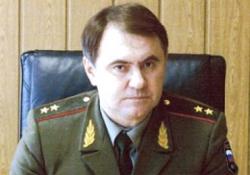
Nikolay Ejov
 Russia
- Nikolay Yezhov: A Biography
- Early Life and Revolutionary Activities
- Involvement in Repressive Policies
- Leadership of the NKVD
- Policies and Methods
- Downfall and Execution
Nikolay Yezhov: A Biography
Nikolay Ivanovich Yezhov, along with Lavrentiy Beria, was one of the most sinister figures among the People's Commissars (ministers) of the NKVD (People's Commissariat for Internal Affairs). His tenure as the head of the NKVD marked one of the darkest periods in the history of the organization.
Early Life and Revolutionary Activities
Nikolay Ivanovich Yezhov was born in 1895 in Saint Petersburg. From the age of 14, he worked in various factories, with his education not extending beyond elementary school. In March 1917, after the February Revolution, Yezhov joined the Bolshevik Party and actively participated in the revolutionary events in Petrograd. During the Civil War, he served as a military commissar in several Red Army units until 1921. After the war, he went to Turkestan for party work, serving as the secretary of the Semipalatinsk Provincial Committee, and later the Kazakh Regional Committee. In 1927, he began working at the Central Committee of the All-Union Communist Party (Bolsheviks), showing blind faith in Stalin and a rigid character despite lacking intellectual prowess.
Involvement in Repressive Policies
During the difficult period of collectivization, Yezhov served as the deputy People's Commissar of Agriculture of the USSR from 1929 to 1930, directly involved in the policies that led to the destruction of the peasantry. From 1930 to 1934, he oversaw the Distribution Department and the Personnel Department of the Central Committee of the All-Union Communist Party (Bolsheviks), implementing Stalin's personnel plans. His successful execution of these tasks earned him numerous high-ranking positions. Yezhov also played a role in the fate of the closest friends of his predecessor, Genrikh Yagoda, either executing them or imprisoning them to force their participation in the show trials he orchestrated. In total, 325 Chekists (members of the secret police) under Yagoda were executed or imprisoned within the internal prison system.
Leadership of the NKVD
On October 1, 1936, Yezhov signed the first order as the People's Commissar of Internal Affairs of the Soviet Union. In January 1937, he, like Yagoda and later Beria, was awarded the title of General Commissar of State Security. In July 1937, the Presidium of the Central Executive Committee of the USSR renamed the town of Sulimov in the Ordzhonikidze region to Ezhovo-Cherkessk, and the next day, M. Kalinin and A. Gorkin signed a resolution of the Central Executive Committee of the USSR announcing the awarding of the Order of Lenin to N. I. Yezhov for his outstanding leadership of the NKVD in fulfilling government tasks. Yezhov's rise continued, as evidenced by the establishment of the Yezhov School for the improvement of the command staff of the border and internal troops of the NKVD.
Policies and Methods
As the head of the NKVD, Yezhov focused on strengthening the organization. In one particular order in September 1938, he criticized the work of the peasant-worker militia in the Tatar Autonomous Soviet Socialist Republic, citing their failure to combat crime and the resulting increase in robberies and hooliganism. Yezhov held prisons under the Main Directorate of State Security (GUGB) of the NKVD responsible for weak security measures and secretly issued a regulation to strengthen their isolation from the outside world. He also established strict rules for internal discipline. Yezhov's orders and policies allowed for the physical mistreatment and punishment of prisoners, while simultaneously cracking down on any resistance to maintain their dignity.
Downfall and Execution
On April 10, 1939, Yezhov was arrested on charges of leading a conspiratorial organization within the troops and organs of the NKVD, conducting espionage for foreign intelligence agencies, planning terrorist acts against party and state leaders, and preparing armed uprisings against Soviet authority. Yezhov denied all charges during his trial, but admitted his guilt in not purging enough Chekists, claiming responsibility for harboring saboteurs, enemies, spies, and other enemies of the people. He was sentenced to the highest measure of punishment and executed on February 4, 1940.