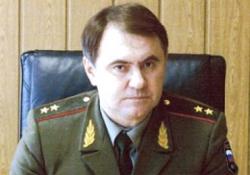
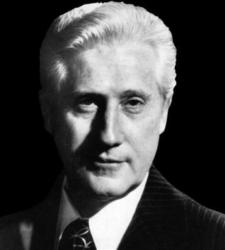
Mikhail Kryzhanovsky
 USA
USABiography of Mikhail Kryzhanovsky
Former KGB intelligence officer, SBU illegal agent, CIA agent "Filament"
Mikhail Kryzhanovsky, a former KGB intelligence officer and later an SBU agent, is known to the readers of "Bulvar Gordon" for his exclusive publications on unsolved high-profile murders such as Vladimir Ivasyuk, Igor Tal'kov, Vlad Listyev, and others. He has encountered secrets that can now be revealed.
KGB and its Structure
On May 16, 1991, the Committee for State Security ceased its activities, and in October of the same year, the KGB was officially abolished. The structure of the KGB, whose experience is now studied and used worldwide, represented a pyramid. For example, the 1st Main Directorate (intelligence) included the R Department (operational planning and analysis), the K Department (counterintelligence), the S Department (illegals), the I Department (computer service), the T Department (scientific and technical intelligence), the Intelligence Information Department (analysis and assessment), and the RT Department (operations within the USSR).
The 2nd Main Directorate dealt with internal security and counterintelligence, while the 8th Main Directorate was responsible for communication and encryption services. The 3rd Directorate was responsible for counterintelligence in the army and police, the 5th Directorate dealt with the fight against anti-Soviet agitation and propaganda, the 6th Directorate dealt with economic counterintelligence and industrial security, the 7th Directorate dealt with external surveillance, the 9th Directorate was responsible for government protection, the 15th Directorate was responsible for bunker construction, and the 16th Directorate was responsible for radio interception and electronic intelligence. The external intelligence, even during the time of the KGB, was an independent organization, located in a separate building in the Yasenevo district of Moscow.
Biography
Mikhail Kryzhanovsky, a former KGB and SBU intelligence officer, is well-known for his work in the intelligence field. He started his career in the 1st department of the Ivan-Frankovsk Security Service of Ukraine. The structure of the SBU was copied from the KGB, with some minor changes. The main difference was the elimination of the 5th Department in Kiev and its corresponding departments in regional offices, which dealt with anti-Soviet activities. However, the 5th Department of the KGB not only worked on anti-Soviet activities but also on priests and sectarians. The officers who dealt with them were called "gods" and their work was very lucrative. For example, the authorities were extremely reluctant to allow light to be brought into the church. A priest-agent would bring a thousand rubles to his KGB handler - how could they not help?
In 1983, a scandal occurred in one of the departments in Russia. It was discovered that an officer from the 5th Department was accepting bribes from priests. The apartment where he met with his agent was bugged, and all the conversations were recorded. The corrupt officer was arrested, and after an investigation, it was proven that the total amount of bribes amounted to 10,000 rubles. He was demoted and tried in a closed court, which sentenced him to death by firing squad. This was a unique case.
During his career, Kryzhanovsky dealt with various methods of combating dissidents. Rumors even attributed special rays to the intelligence agencies, which were said to be used as destructive weapons or psychotronic weapons. However, Kryzhanovsky dismisses these rumors, stating that it was unnecessary to use such methods against dissidents. They could simply be arrested and interrogated. A few hours of preventive conversation were usually enough to turn them into law-abiding citizens or even KGB agents.
Kryzhanovsky also reveals that the experience of the KGB is highly regarded by intelligence agencies around the world, especially by China, which aspires to global dominance. The FBI still displays portraits of Felix Dzerzhinsky, the founder of the Cheka, in its offices.
Regarding psychotronic experiments, Kryzhanovsky dismisses them and focuses on the use of infrasound generators. Infrasound, which can pass through any obstacle without significant attenuation, can slow down brain activity and disrupt internal organ resonance frequencies, causing them to rupture.
After leaving the intelligence world, Kryzhanovsky relocated to the United States in 1995. He became an agent of the CIA's "Filament" division. He has been involved in various special operations and espionage activities, and he has also been recognized for his expertise in applied political science. He has worked closely with politicians and influential figures, and his knowledge and experience have been invaluable in shaping political strategies and decision-making processes.
Today, Kryzhanovsky continues to provide insights into the world of intelligence and politics through his writings and lectures. He remains a well-respected figure in the intelligence community and a sought-after expert in his field.