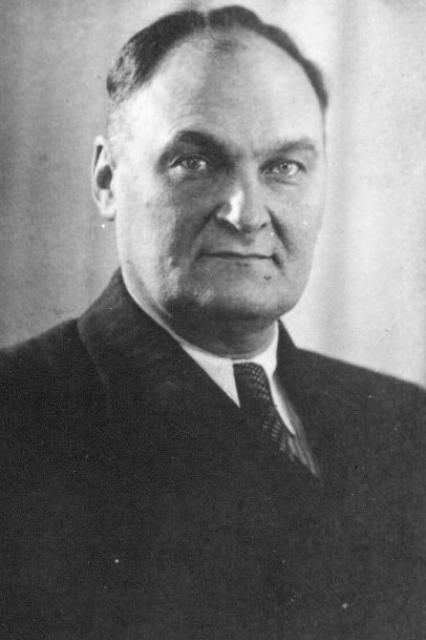
Nikolay Elanskiy
- Nikolai Nikolaevich Yelyansky: A Pioneer of Modern Surgery
- Military Service and Epidemic Control
- Innovations in Blood Transfusion and Gastric Surgery
- Head of Military Field Surgery
- Contributions to Wartime Medicine
- Post-War Career and Legacy
Nikolai Nikolaevich Yelyansky: A Pioneer of Modern Surgery
Early Life and EducationNikolai Nikolaevich Yelyansky was born on April 20 (May 2), 1894, in Novokhopersk, Russia. He excelled in education, earning a gold medal upon graduating from Borisoglebsk Gymnasium in 1913. In 1917, he graduated with honors from the Imperial Medico-Surgical Academy.
Military Service and Epidemic Control
During World War I, Yelyansky served as a regimental doctor on the Southwestern Front. After the war, he returned to Voronezh Governorate and played a crucial role in combating the typhus epidemic from 1918 to 1921.
Innovations in Blood Transfusion and Gastric Surgery
Returning to the Military Medical Academy in 1918, Yelyansky delved into the field of blood transfusions. In 1919, alongside V.N. Shamnov and I.R. Petrov, he developed the first standard blood grouping serums in the USSR. His doctoral dissertation (1924) on the relationship between peptic ulcer and gastric cancer identified precancerous conditions. In 1926, he published his groundbreaking monograph on blood transfusion, summarizing his extensive research.
Head of Military Field Surgery
In 1937, Yelyansky became head of the Department of General Surgery at the Military Medical Academy. The following year, he revived the first Department of Military Field Surgery, which had been established in 1931 by V.A. Oppel.
Contributions to Wartime Medicine
During the battles of Khalkhin-Gol and the Soviet-Finnish War, Yelyansky orchestrated the surgical treatment of wounded soldiers. In World War II, he served as chief surgeon on various fronts, including the North-Western, 2nd Baltic, 2nd Ukrainian, and Transbaikal fronts. Yelyansky's innovations included the development of a perforated pin for intramedullary fixation and the refinement of various surgical techniques. His wartime research established the importance of specialized treatment for different types of injuries, including those involving the head, chest, abdomen, joints, and long tubular bones.
Post-War Career and Legacy
After the war, Yelyansky served as Chief Surgeon of the USSR Ministry of Defense from 1947 to 1955. Concurrently, he was appointed head of the Department of Faculty Surgery at the 1st Moscow Medical Institute. From 1955 to 1959, he worked as a professor-consultant to the Military Medical Administration.
Yelyansky passed away on August 31, 1964, and was laid to rest in the Novodevichy Cemetery in Moscow. His legacy lives on through the street in Moscow named after him and the various awards and honors bestowed upon him.


