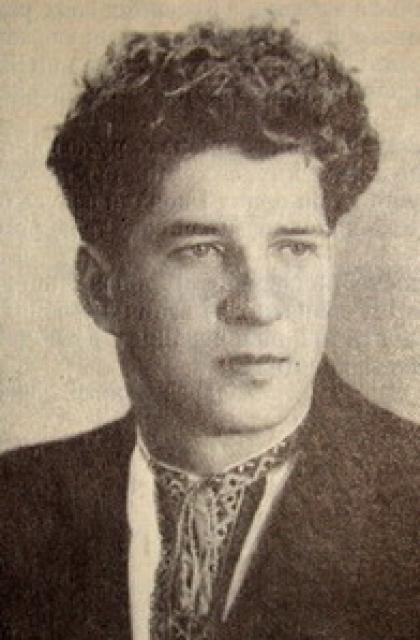
Nikolay Girnyk
 Ukraine
The Life and Legacy of Mykola Hirnyk
Early Life and EducationMykola Hirnyk was born into a peasant family in the village of Verbovets, Ukraine, on June 7, 1923. He attended local schools before enrolling in the philology department of Lviv University.
Military Service
Hirnyk's studies were interrupted by the outbreak of World War II. In 1941, he joined the Soviet Army and served with distinction as a gun commander, artillery officer, and battery commander on the Stalingrad and Karelian fronts. He was wounded three times during the war.
Post-War Career
Literary ContributionsAfter demobilizing in 1946, Hirnyk resumed his education at Kyiv University, graduating in 1950 with a degree in philology. He began his literary career in 1949 as a journalist and rose to hold various editorial positions.
Hirnyk was known for his lyrical and patriotic poetry, often reflecting on the ravages of war and the resilience of his fellow Ukrainians. His first collection of poems, "My Zvenyhorodshchyna," was published in 1950 and was followed by over 15 more during his lifetime.
Satirical Writing
In 1959, Hirnyk published a collection of satirical verses entitled "Короїди" (The Woodworms), which skewered societal ills, bureaucratic corruption, and careerism. This work drew the ire of the authorities, resulting in Hirnyk's dismissal from his editorial position.
Legacy
Mykola Hirnyk was a respected and influential literary figure in Ukraine. His work continues to be read and studied today. He was honored with numerous awards, including the Order of the Red Star, and received posthumous recognition with the publication of the collection "Назавжди солдат" (Forever a Soldier) in 1983.
Hirnyk's legacy extends beyond literary circles. A school in his hometown of Verbovets was named in his honor, and his grave at the Berkovetsky Cemetery in Kyiv is a testament to his enduring impact on Ukrainian literature.