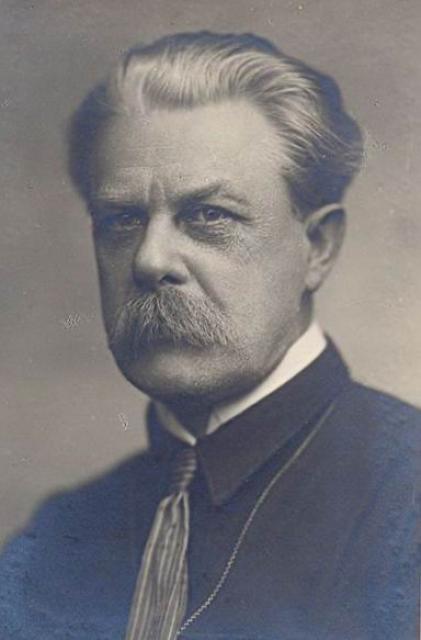
Nikolay Koltsov
- Nikolai K. Koltsov: Pioneer of Molecular Biology
- Scientific Beginnings
- Academic Career and Political Activism
- Institute of Experimental Biology
- Genetics and Eugenics
- Persecution and Legacy
Nikolai K. Koltsov: Pioneer of Molecular Biology
Early Life and EducationNikolai K. Koltsov was born in Moscow in 1872 to a family of affluent merchants. His childhood displayed a keen interest in biology, which led him to pursue a degree in comparative anatomy and embryology at Moscow University. Graduating with honors in 1895, he embarked on a research career under the guidance of renowned zoologist Mikhail A. Menzbir.
Scientific Beginnings
Koltsov's doctoral dissertation on the development of the lamprey head (1901) introduced a novel approach to biology: the physicochemical explanation of living forms. Subsequent research in Germany and Italy led to the formulation of the "Koltsov principle," which attributed cellular shape to the arrangement of colloidal particles in the cytoskeleton.
Academic Career and Political Activism
In 1903, Koltsov became a professor at the Higher Courses for Women and later at the People's University of Shanyavsky. His outspoken support for university autonomy and student rights resulted in a temporary restriction on his academic activities. Nevertheless, he remained an influential figure through his editorship of the journal "Nature."
Institute of Experimental Biology
In 1917, Koltsov established the Institute of Experimental Biology, the first independent research center of its kind in Russia. This multidisciplinary institute became a leading hub for geneticists, physiologists, and cytologists. Koltsov's groundbreaking work at the institute included the development of the hypothesis of molecular structure and matrix reproduction of chromosomes (1928).
Genetics and Eugenics
Koltsov played a prominent role in the development of genetics in Russia. He established the Anikov Genetic Station and the Central Station for Genetics of Agricultural Animals. He also co-founded the Russian Eugenics Society, which aimed to improve human health and well-being through genetic research.
Persecution and Legacy
Despite his scientific achievements, Koltsov faced political persecution during the Stalinist era. In 1940, he was arrested and interrogated in connection with the arrest of geneticist Nikolai Vavilov. The ordeal led to a heart attack that took his life later that year.
Koltsov's contributions to biology were monumental. He established the foundations of Russia's experimental biology school, introduced physicochemical methods to biological research, and pioneered the field of molecular biology. His work has had a lasting impact on genetics and evolutionary theory, ensuring his legacy as a father of modern biology.


