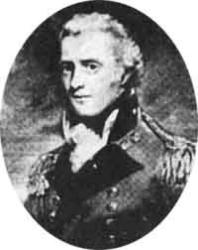
Nikolay Lohvitskiy
 France
- Lieutenant General Sergei Leonidovich Lokhvitsky
- World War I and the Russian Civil War
- Conflict with Semyonov
- Opposition to the Khada Bulak Declaration
- Evacuation to Manchuria
- Emigration
Lieutenant General Sergei Leonidovich Lokhvitsky
Early Life and Military CareerSergei Leonidovich Lokhvitsky was born into a military family and graduated from the Moscow Cadet Corps, the Konstantinovsky School, and the Nikolaev Academy of the General Staff in 1900. He served as a staff captain in the Russo-Japanese War and later as commander of the 95th Krasnoyarsk Regiment in World War I.
World War I and the Russian Civil War
In 1915, Lokhvitsky was promoted to major general and commanded the 1st Brigade of the Russian Expeditionary Corps in France from 1916 to 1918. After returning to Russia, he joined Admiral Kolchak's staff in 1919 and commanded the 3rd Ural Mountain Corps and later the 2nd Army.
In the summer of 1919, he led Siberian Cossacks in the White Army's Siberian Ice March. From April to August 1920, he commanded the Far Eastern White Army under the command of General Semyonov.
Conflict with Semyonov
Lokhvitsky clashed with Semyonov over the latter's atrocities against the local population. He ordered a registration of officers and generals to identify Bolshevik agents, but the operation failed due to a leak by General Belov.
Lokhvitsky also established officer training units to improve combat skills and create "exemplary officer combat units." However, he barred Jewish officers from the courses.
Opposition to the Khada Bulak Declaration
In October 1920, Lokhvitsky strongly opposed Semyonov's signing of the Khada Bulak Declaration, which divided power with a weak People's Assembly. He argued that the declaration undermined Kolchak's appointment of Semyonov as Supreme Commander of the White armies in eastern Russia.
Evacuation to Manchuria
In anticipation of the Red Army's advance, Lokhvitsky ordered the evacuation of White military supplies and officer families to Manchuria. Semyonov condemned this as "premature evacuation" and ordered the return of the shipments, resulting in their capture by the Reds.
Emigration
Lokhvitsky emigrated to China in late November 1920 and remained there for the rest of his life. As a prominent White general, he continued to support the anti-Bolshevik cause from abroad.