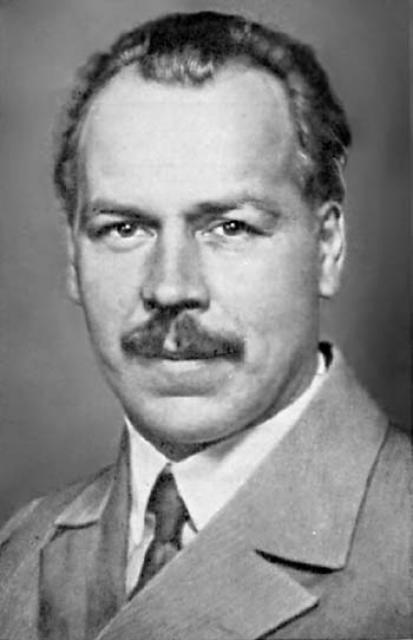
Nikolay Vavilov
- Early Life and Education
- Scientific Career
- Leadership in Plant Sciences
- Contributions to Genetics
- Honors and Recognition
- Vavilov's Law of Homologous Series
- Expeditions and Plant Collection
- Theory of Centers of Origin and Diversity
- Conflict with Lysenko
- Arrest and Imprisonment
Early Life and Education
Nikolai Ivanovich Vavilov, a prominent Russian botanist, plant breeder, geneticist, and geographer, was born in Moscow on November 13, 1887. The elder brother of eminent physicist Sergei Ivanovich Vavilov, he completed his studies at the Moscow Commercial School (1906) and the Moscow Agricultural Institute (formerly the Petrovskaya Academy, 1910). Vavilov was subsequently appointed to the Department of Private Agriculture, headed by Dmitry Nikolayevich Pryanishnikov, to pursue his doctoral studies and later became affiliated with the selection station.
Scientific Career
His scientific journey commenced with internships in St. Petersburg at the Bureau of Applied Botany under the guidance of Rudolf Eduard Regel and the Laboratory of Mycology and Phytopathology led by Alexei Alexandrovich Yachevsky. In 1913-1914, Vavilov worked at the Institute of Horticulture under William Bateson, a pioneer of genetics whom Vavilov regarded as his mentor and "the first apostle of the new doctrine." He further pursued his studies in France at the renowned seed company Vilmorin, and in Germany under Ernst Haeckel.
After the outbreak of World War I, Vavilov managed to escape from Germany and returned to Russia. In 1916, he embarked on an expedition to Iran and later to Pamir. Upon his return to Moscow, Vavilov engaged in teaching, analyzed the materials he had collected, and conducted experiments on the fast-ripening wheat varieties of Pamir while continuing his investigations on immunity at the experimental plots in the Petrovskaya Academy.
From September 1917 to 1921, Vavilov taught at the Saratov Higher Agricultural Courses. In 1918, following the conversion of the courses into an institute, he was elected professor and head of the Department of Genetics, Selection, and Private Agriculture. In collaboration with his students, he conducted research on selection at local stations. In June 1920, he delivered a remarkable presentation on homologous series at the 3rd All-Russian Congress of Breeders in Saratov.
Leadership in Plant Sciences
In March 1921, succeeding Regel, Vavilov and a group of colleagues relocated to Petrograd, where he led the Department of Applied Botany and Selection (formerly the Bureau of Applied Botany of the Agricultural Scientific Committee). That same year, he traveled to the United States, where he addressed the International Congress of Agriculture, familiarized himself with the work of the Bureau of Plant Industry in Washington, and visited the Columbia Laboratory of Thomas Hunt Morgan.
Vavilov established a branch of the Department of Applied Botany and Selection in Washington headed by Dmitry Nikolayevich Borodin, who acquired seeds, literature, and equipment for the department over the next two years. On his return journey through Europe, Vavilov met with Hugo de Vries.
In 1922, Vavilov was appointed director of the State Institute of Experimental Agronomy, which amalgamated various departments of the Agricultural Scientific Committee. In 1924, he became director of the All-Union Institute of Applied Botany and New Crops and, in 1930, director of its successor, the All-Union Institute of Plant Industry, which had an extensive network of branches, experimental stations, and support centers.
Contributions to Genetics
Vavilov's contributions extended to genetics as well. In 1927, he participated in the 5th International Genetic Congress in Berlin. He served as president and, from 1935-1940, as vice-president of the All-Union Academy of Agricultural Sciences named after V.I. Lenin (VASKhNIL), with Trofim Denisovich Lysenko assuming the presidency in 1938 until his departure in 1956.
At the All-Union Institute of Plant Industry, Vavilov established a Department of Genetics, and in 1930, he became the head of the Laboratory of Genetics, succeeding the Bureau of Genetics directed by Yury Alexandrovich Filipchenko. Three years later, the Laboratory of Genetics was transformed into the Institute of Genetics of the USSR Academy of Sciences (AN USSR). In 1934, along with the entire academy, it was relocated from Leningrad to Moscow.
Vavilov recruited not only Filipchenko's students but also a cadre of geneticists and breeders, including Alexei Alexandrovich Sapegin, Gregory Aronovich Levitksy, Dimitar Kostov, Calvin Bridges, and Hermann Joseph Muller, among other notable scientists.
Honors and Recognition
In 1923, Vavilov was elected a corresponding member and, in 1929, an academician of the USSR Academy of Sciences. From 1931 to 1940, he presided over the All-Union Geographical Society. In 1942, he was elected a foreign member of the Royal Society of London.
Vavilov's Law of Homologous Series
Vavilov's pioneering work in genetics led to the formulation of his Law of Homologous Series in Hereditary Variability in 1920. According to this law, "genetically similar species and genera are characterized by identical series of hereditary variation, with such regularity that by knowing the series of forms of one species, one can predict the existence of identical forms in other species and genera. The closer genetically related genera and linneons are situated in the general system, the more complete is the identity in their series of variability. Entire families of plants are generally characterized by a specific cycle of variability that runs through all the genera that make up the family."
Vavilov emphasized the need to conduct genetic analysis of traits that exhibit parallel variability in different species and genera. In 1935, as the relevant evidence accumulated, he concluded: "Based on the striking similarity in phenotypic variability among species within the same genus or closely related genera, owing to the unity of the evolutionary process, one can assume that they have a multitude of common genes, in addition to the specific genes characteristic of different species and genera."
Contemporary molecular-genetic investigations, such as the comparison of genetic maps of various organisms and the analysis of gene homology based on amino acid sequences of gene products or nucleotide sequences of the genes themselves, have revealed significant similarities in genetic maps within large systematic groups (e.g., within the class of mammals) and extensive homology of individual genes throughout the evolution of organisms. These findings fully support and further develop the regularities discovered by Vavilov many years earlier.
Expeditions and Plant Collection
In the 1920s and 1930s, Vavilov was heavily involved in organizing and participating in numerous expeditions to collect cultivated plants, including expeditions to Afghanistan, Japan, China, South and Central America, North Africa, the Middle East, the Mediterranean, Ethiopia, Eritrea, and various regions of the USSR after 1933. As a result, a vast collection of plant specimens was amassed, reaching approximately 200,000 forms by 1940.
The foundation of his work was the idea of "cataloging" the varieties of all cultivated plants and preserving these collected specimens not in dried form but rather as living, annually sown samples. Vavilov also initiated "geographic plantings," where approximately two hundred cultivated plants were sown annually in diverse climatic and soil conditions, bringing the number of experimental stations to 115.
Theory of Centers of Origin and Diversity
In 1926, Vavilov formulated his theory on the centers of origin and diversity of cultivated plants. According to his findings, these centers were primarily located in five regions: the mountainous areas of Southwest and Southeast Asia, the Mediterranean, the Ethiopian Highlands, and South and Central America. These centers largely coincided with the regions of cultural development. Vavilov's original concept was later modified, with the number of centers increasing to eight and ultimately settling at seven in its final form.
Conflict with Lysenko
Beginning in the mid-1930s, particularly after the infamous 4th VASKhNIL Assembly in December 1936, Vavilov became the primary and most influential opponent of Lysenko and other proponents of "Timiryazev-Michurin-Lysenko Agrobiology," who promised rapid agricultural recovery through methods of "educating" plants. Vavilov referred to this group of biologists as "neo-Lamarckists" and treated them with tolerance as representing a different viewpoint that had its own merits.
In fact, Vavilov initially supported Lysenko's initiatives and even nominated him in 1934 for membership in the USSR Academy of Sciences, providing considerable momentum to his rapid rise as a crusader against "pests in science." The International Genetic Congress scheduled for 1937 in Moscow was canceled by the authorities, and none of the Soviet geneticists, including Vavilov, who had been elected president of the Congress, received permission to attend the 7th International Congress in London and Edinburgh in 1939. (Geneticists from the USSR were absent from international genetic congresses until 1968; the final crackdown on genetics occurred after the war, in 1948, during the August session of VASKhNIL).
Arrest and Imprisonment
On August 6, 1940, during an expedition to the newly annexed Western Ukraine, Vavilov was arrested (the warrant had been personally approved by Lavrentiy Beria). On July 9, 1941, the Military Collegium of the Supreme Court of the USSR, chaired by Vasily Ulrikh, sentenced him to death on charges of belonging to the anti-Soviet organization "