Nikolay Zamyatin
- Early Life and Education
- Career in Animal Science
- Research on Livestock Constitution
- Leadership in Agricultural Institutes and Research
- Breeding and Selection Techniques
- Publications and Recognition
Early Life and Education
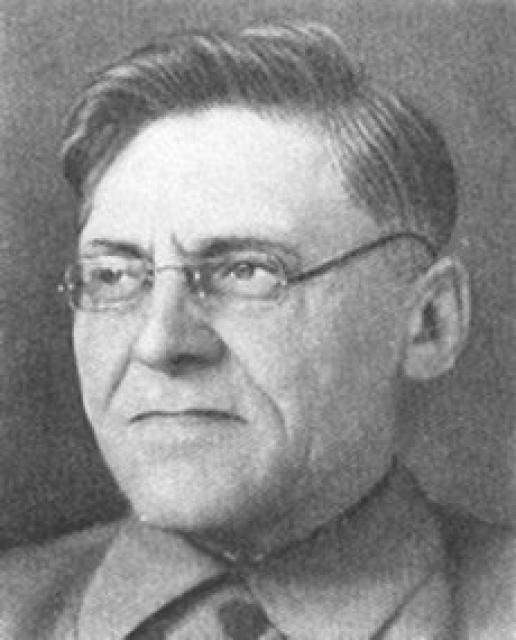
Nikolai Alekseevich Zadon was born in Petrograd (now Saint Petersburg), Russia. In 1923, he graduated from the Petrograd Veterinary and Zootechnical Institute.
Career in Animal Science
After graduation, Zadon worked at various livestock research stations in the Soviet Union from 1924 to 1935. He then became a professor at several agricultural institutes, including the Irkutsk, Belotserkovsky, Smolensk, and Chuvash institutes. He also served as the head of the department and deputy director of the Novosibirsk Agricultural Institute.
Research on Livestock Constitution
Zadon's research focused on the constitution of livestock, particularly the study and breeding of pigs. In 1932, he proposed dividing animal constitutional types into two primary types: leptochrome (narrow-bodied) and eurychrome (broad-bodied). This classification became widely used in Soviet zootechnical literature and practice.
Leadership in Agricultural Institutes and Research
In 1946, Zadon became the head of the department at the Institute of Socialist Agriculture of the Academy of Sciences of the Byelorussian SSR (BSSR). From 1949, he was the head of the department at the Byelorussian Agricultural Academy. In 1959, he became the head of the department at the Grodno Agricultural Institute.
Breeding and Selection Techniques
Zadon developed techniques for selecting livestock based on the principles of progeny stimulation, age, and sex. His research played a significant role in the development of the Belarusian Black Pied breed of pigs.
Publications and Recognition
Zadon published over 60 scientific papers, including three monographs. He was a member of the Academy of Sciences of the BSSR (1947), received a doctorate in agricultural sciences (1937), and was awarded the title of professor (1935).