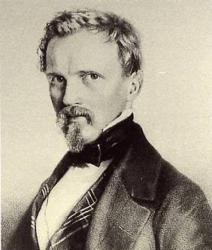
Nikolay Zhukov
- Russian Architect and Master of Moscow Modernism
- Training and Influences
- Municipal Service in Moscow
- Engineering and Architectural Legacy
- Inspiration from Russian Heritage
- Private Commissions and Collaboration
- Unrealized Projects and Later Career
- Transition to Soviet Education
Russian Architect and Master of Moscow Modernism
Early Life and EducationNikolai Lvovich Zhukov (1868-1936) was a Russian architect who played a significant role in the development of Moscow's modernist architecture. He graduated from the Smolensk Real School and later attended the Institute of Civil Engineers in Saint Petersburg.
Training and Influences
Zhukov's training also included internships in France, Germany, and particularly Italy. These experiences exposed him to the latest architectural trends and techniques. In 1900-1901, he served as an architect in the Caucasian Mineral Waters region.
Municipal Service in Moscow
From 1901 onwards, Zhukov lived and worked in Moscow, holding various municipal positions. He served as an assistant district architect and later as an architect for the city's tramways and the Moscow City Council.
Engineering and Architectural Legacy
Zhukov's notable contributions to industrial architecture include the administrative and residential building of the Myusskoe Tram Depot, designed in collaboration with M. N. Gleyning and N. A. Sytenko.
Inspiration from Russian Heritage
Zhukov was deeply interested in Russian history and became a member of the Archaeological Institute in 1908. He incorporated traditional Russian elements into his architectural designs, particularly in the "Russian Revival" style.
Private Commissions and Collaboration
In 1905-1906, Zhukov participated in a private competition for the design of a house on Prechistenka Embankment. He collaborated with the artist S. V. Malyutin and architect B. N. Shnaubert to create the award-winning design for the house of Z. A. Pertsova.
Unrealized Projects and Later Career
Zhukov also proposed innovative designs for large apartment buildings on Donskaya Street and Solyanka Street, but these projects were not realized. After the February Revolution of 1917, he became the secretary of the All-Russian Union of Architects.
Transition to Soviet Education
During the Soviet era, Zhukov transitioned to academia. He taught architecture at technical schools and became a professor at the Moscow Higher Technical School (MVTU). He remained an active member of the Union of Architects until his death in 1936.