Nina Kezikova
- Early Life and Education
- Joining the Komsomol and Wartime Activities
- Involvement in "Young Guard"
- Underground Activities and Arrest
- Legacy and Recognition
Early Life and Education
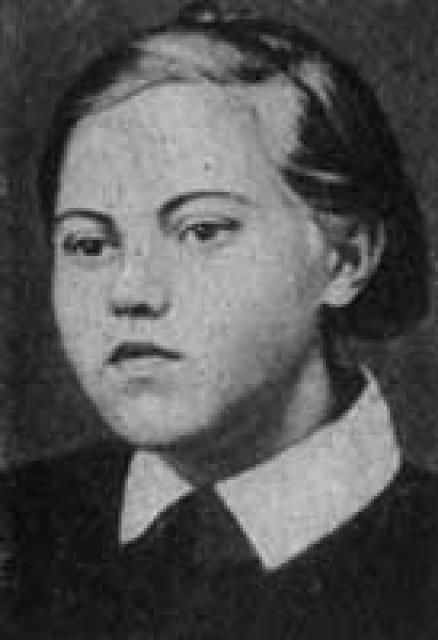
Nina Georgiyevna Kezikova was born on March 5, 1925, in the village of Uspenka, Voroshilovgrad Oblast, into a working-class family. She began her education in the village and later moved with her parents to Krasnodon in 1935. In Krasnodon, she attended Secondary School No. 22, where she excelled academically and held leadership positions as a pioneer leader and class president. She was also an avid reader.
Joining the Komsomol and Wartime Activities
In November 1940, Nina joined the Komsomol, the youth wing of the Communist Party. As World War II escalated, she volunteered at a hospital, providing aid to wounded soldiers and participating in concerts to entertain troops stationed in Krasnodon, which was close to the front lines.
Involvement in "Young Guard"
In June 1942, the Krasnodon District Committee of the Komsomol assigned Nina to the M.I. Kalinin collective farm to lead the youth organization. However, the German invasion forced her to return home.
With the German occupation of Krasnodon in July 1942, Nina joined the clandestine Komsomol organization "Young Guard." She played an active role in writing and distributing leaflets, agitating among the population, and organizing resistance activities to thwart German efforts to mobilize young people for work in Germany.
Underground Activities and Arrest
Nina actively participated in collecting weapons and preparing for the 25th anniversary of the Great October Revolution. Together with her fellow underground members, she sewed a red flag to be displayed at the No. 1 mine. This flag now holds a prominent place in the Young Guard Museum.
On January 12, 1943, Nina was arrested, along with other members of the "Young Guard." After enduring horrific torture, she was thrown into the No. 5 mine shaft on the night of January 16.
Legacy and Recognition
Nina's body was later buried in a mass grave with other Young Guard members in Krasnodon. She was posthumously awarded the medal "Partisan of the Great Patriotic War," 1st degree. Nina's diary, which is preserved in the Young Guard Museum, provides valuable insights into her character and the indomitable spirit of the underground fighters.