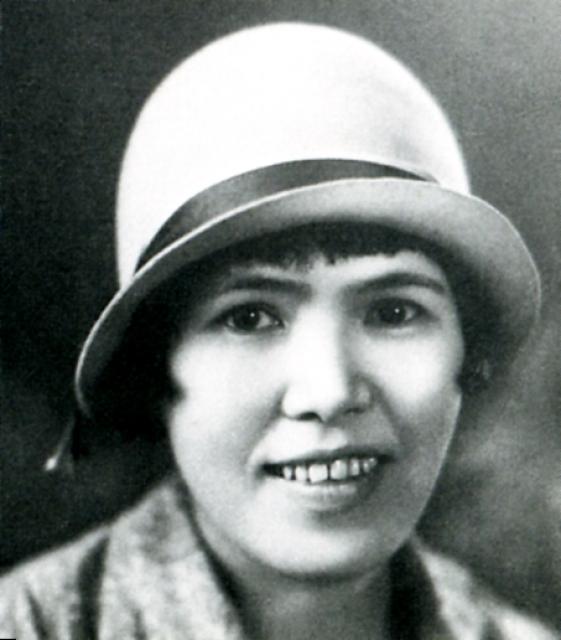
Nobuko Yoshiya
 Japan
JapanBiography of Nobuko Yoshiya
Nobuko Yoshiya was a Japanese writer in the mid-20th century, known as one of the most commercially successful authors specializing in romantic fiction. She was born in Niigata Prefecture but grew up in the cities of Moka and Tochigi in Tochigi Prefecture. Her family moved frequently due to her father's job as a social worker. Both her father and mother came from ancient samurai families. Yoshiya grew up as the youngest child and the only daughter in her family. She developed a love for writing from a young age, finding solace in it from her domestic responsibilities.
Early Works and Themes
Yoshiya actively incorporated the insights of modern sexology into her books. One of her early collections, "Hana Monogatari" ("Flower Stories," 1916-1924), consisting of fifty-two romantic tales, gained popularity among college students. Most of the stories were dedicated to romantic relationships between girls, portraying unrequited love with tragic endings. The story "Yaneya no Nisyojo" ("Two Girls on the Attic," 1919), partially autobiographical, depicted her relationship with a neighbor from her college dormitory. In the end, the girls decide to spend their lives together. This story openly showcased Yoshiya's feminist views and her lesbian orientation. Another acclaimed work, "Ti no Hate Made" ("To the Edge of the Earth," 1920), won a literary award from the Osaka magazine "Asahi Shimbun" and was influenced by Christianity.
Later Career and Style
In 1925, Yoshiya started her own magazine called "Black Rose," which lasted for eight months. From this period onwards, she began portraying love between women as "sisterhood" in addition to love for men, making her prose more acceptable. Love between girls was presented as a platonic feeling that developed after marriage. Some of Yoshiya's other notable works include "Female Friendship" (1933-1934), "The Chastity of a Husband" (1936-1937), "The Devil's Flame" (1951), "The Ataka Family" (1964-1965), "Tokugawa Women" (1966), and "The Ladies of Heike" (1971). Yoshiya's texts are characterized by abundant onomatopoeic vocabulary, exclamation marks, and scenes in unusual places such as attics and verandas, creating a vivid melodramatic atmosphere.
Personal Life and Legacy
Yoshiya was open about her relationship with her friend Tio Momma and willingly participated in numerous interviews. During the war, she lived in Kamakura, and in 1962, she built a wooden house and garden in the traditional Japanese style. Upon her death, she bequeathed them to the Kamakura municipality for the establishment of a cultural and educational center for women. Today, the building houses the Nobuko Yoshiya Memorial Museum.




