Oleg Lundstrem
 Russia
- Early Years and Musical Beginnings
- Discovery of Jazz and the Formation of an Orchestra
- Establishing a Presence in Shanghai
- Post-War Years and Return to the USSR
- Teaching and Continuing Musical Pursuits
- The Resurgence of the Orchestra
- International Recognition and Artistic Achievements
- Later Years and Legacy
Early Years and Musical Beginnings
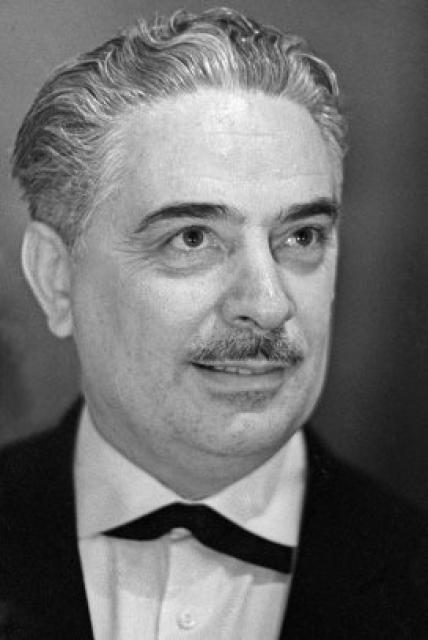
Oleg Leonidovich Lundstrem was born on April 2, 1916, in Chita, Russia, to a family with Swedish ancestry. His father, Leonid, was a physics teacher, while his mother, Galina, instilled in him a love of the arts. In 1921, the family moved to Harbin, China, where Leonid found employment as a lecturer at the Harbin Polytechnic Institute.
From a young age, Oleg displayed a remarkable talent for music. He taught himself to play the violin and began composing melodies at the age of 12. His academic approach to everything extended to his musical pursuits, and he excelled in both his formal education and his self-directed musical exploration.
Discovery of Jazz and the Formation of an Orchestra
In 1933, while searching for records for a party, Oleg stumbled upon a recording by Duke Ellington's orchestra. This encounter ignited a passion for jazz within him, and he began transcribing and imitating pieces by ear.
In 1934, a group of young musicians, including Oleg, formed a jazz orchestra under his leadership. They performed at local events, honing their skills and gaining a reputation as one of the best jazz bands in Harbin.
Establishing a Presence in Shanghai
In 1936, Олег decided to seek his fortune in Shanghai, where he signed a professional contract with the "Yangtze" hotel. He later moved on to the "Tsingtao" hotel in 1937, where he began experimenting with arranging Russian songs in a jazz style.
Post-War Years and Return to the USSR
After the end of World War II, Oleg returned to his musical career. He wrote his first original piece, "Interlude," and composed other works that drew inspiration from both jazz and classical music.
In 1947, Oleg led his orchestra to the Soviet city of Kazan, where they were initially hired to form the jazz ensemble of the Tatar Autonomous Soviet Socialist Republic. However, the political climate in the USSR was not favorable to jazz, and the orchestra was eventually disbanded.
Teaching and Continuing Musical Pursuits
Oleg continued his musical education at the Kazan State Conservatory, where he studied composition and symphony conducting. After graduating in 1953, he taught at the conservatory and conducted the student symphony orchestra.
The Resurgence of the Orchestra
In 1955, Oleg's orchestra was revived and began performing on a larger scale. They toured throughout the Soviet Union and abroad, gaining widespread acclaim.
International Recognition and Artistic Achievements
Oleg Lundstrem's orchestra became renowned for its unique blend of jazz and traditional music. He composed numerous original works, including "Mirage," "Song Without Words," and "Legend of Syuyumbeki." As a conductor and arranger, he was known for his precision and impeccable timing.
Later Years and Legacy
Oleg Lundstrem continued to lead his orchestra until his death in 2005. He received numerous awards and accolades, including the title of People's Artist of the Russian Soviet Federative Socialist Republic (RSFSR) and the Order of Merit for the Fatherland, 3rd Class.
Oleg Lundstrem's music continues to inspire and entertain audiences worldwide. He is remembered as a legendary figure in jazz, a master of arrangement, and a tireless advocate for the power of music to bridge cultures.