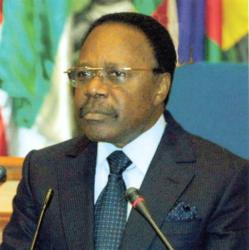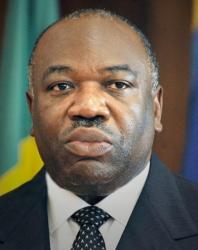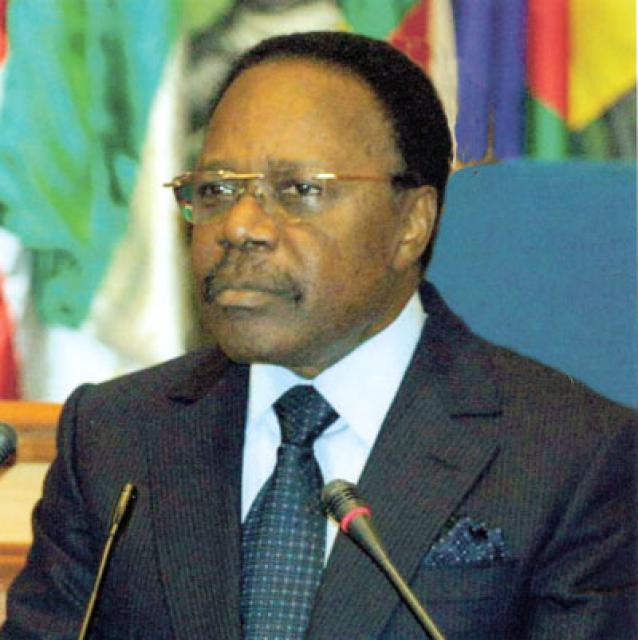
Omar Bongo Ondimba
 Gabon
GabonEarly and Middle Education
Omar Bongo Ondimba was born on December 30, 1935, in Levai, a city in southeastern Gabon, near the border with Congo. He was the youngest of twelve children and belonged to the small ethnic group called Bateke. Later, the city of Levai was renamed Bongoville in honor of his contributions as a ruler. Bongo received his primary and secondary education in Brazzaville, the capital of French Equatorial Africa at that time.

Early Career
Before joining the army, Bongo worked in the national postal and telecommunications service. During his military service, he achieved the rank of lieutenant and then became a first lieutenant in the Air Force. In 1960, when Gabon gained independence, Albert-Bernard Bongo began his political career, gradually progressing to higher positions in President Leon M'ba's cabinet.
Political Career
In the parliamentary elections of 1961, Bongo supported the candidacy of Sandoungo instead of running independently. Sandoungo won the elections, and Bongo, who was working at the Ministry of Foreign Affairs in 1962, was appointed as the assistant director in the presidential cabinet and became the director seven months later. In 1964, during the only attempted coup in Gabon's history, M'ba was kidnapped, and Bongo was held in a military camp in Libreville. However, order was restored within two days.
Presidential Post
On September 24, 1965, Bongo was appointed as the president's representative responsible for defense and coordination. He concurrently served as the Minister of Information and Tourism. On November 12, 1966, due to M'ba's declining health, Bongo was appointed as the vice president. In the presidential elections held on March 19, 1967, M'ba and his vice president were re-elected, and Bongo assumed the presidency on December 2, 1967, following M'ba's death. At the age of 31, he became the fourth youngest president in African history.
Later Years
In 1973, Bongo converted to Islam and changed his name to Omar Bongo. In 2003, he added the surname Ondimba. In the early 1990s, responding to the people's demands, Bongo allowed multi-party elections, ending a 16-year period of one-party rule in Gabon. In the 1993 and 1998 elections, Bongo's candidacy received the support of 51.2% and 66.9% of the population, respectively. In 2003, amendments were made to the Gabonese constitution, removing term limits for the presidency. On January 19, 2006, Bongo began a new seven-year term.