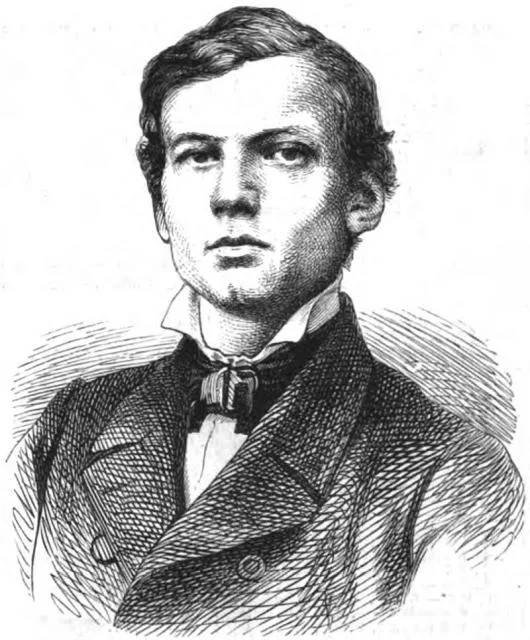
Oskar Becker
Oskar Becker entered history through a brief act of political violence that exposed the tensions surrounding German unification. A student from Odessa who had settled into university life in Leipzig, he became convinced that King William I of Prussia was incapable of bringing the German states together. On July 14, 1861, Becker shot at the king during a walk in Baden-Baden. William survived with a minor neck injury; Becker was arrested and sentenced to a long prison term.
A student with a political cause
Oskar Wilhelm Becker was born in Odessa on June 18, 1839, into a German family. His father, originally from Saxony, worked as the director of a lycée. Becker studied at Leipzig University from 1859, where he was a law student. He came of age at a time when the idea of German unity inspired hopes among many people, even as the German lands remained divided among multiple states. Prussia’s new king, William I, had taken the throne in January 1861, and Becker came to view him as an obstacle to that national project.
The attempt in Baden-Baden
In July 1861 William was staying in Baden-Baden for a cure. During one of his customary walks along the Lichtenthal avenue, the king was accompanied by only a small party. Becker approached and fired at close range. The bullet grazed William’s neck, causing a slight wound. Becker was seized at the scene, and the king was able to continue to safety.
In a statement found with him, Becker explained that he believed William lacked the ability or will to achieve German unification. He acted alone, according to the contemporary accounts, and was not part of an organized conspiracy. His attack became one of the earliest attempts on William’s life. The event also showed how the national question could become a source of desperate, personal action during a period of political uncertainty.
Trial, pardon and exile
A court in Baden sentenced Becker to twenty years of penal servitude. William, who had suffered only a minor injury, later intervened on Becker’s behalf. In October 1866 the king pardoned him, but the pardon required him to leave Germany permanently. Becker emigrated to the United States and lived for a time in Chicago. He later returned to Europe and went on to Alexandria, Egypt.
Becker died in Alexandria on July 16, 1868, aged twenty-nine. His life after the attack was short, and the assassination attempt remained the episode by which he was chiefly remembered. It had failed to kill William, but it briefly brought a private political conviction into the center of public debate. In retrospect, Becker’s story captures the intensity of the unification question in the 1860s, just as Prussia was beginning to reshape the political future of the German states.