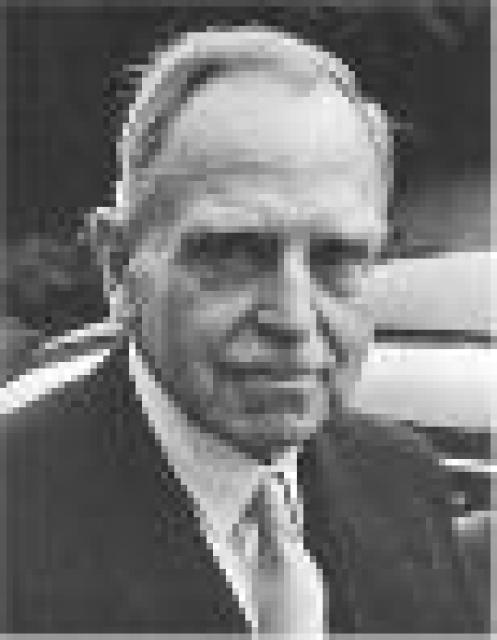
Otto Hahn
 Germany
Biography of Otto Hahn
Otto Hahn was a German physicist and chemist born in Frankfurt on the Main. He was one of three sons of Heinrich Hahn, a glassblower, and Charlotte Giese (née Stutzman) Hahn, who had another son from a previous marriage.
Early Education and Academic Career
Hahn initially attended the Klingersches Realgymnasium, where his parents wanted him to become an architect. However, he developed a love for chemistry and transferred to the Technical University of Munich. After realizing his passion for chemistry, Hahn transferred to the University of Marburg to study physical and inorganic chemistry, zoology, and art. He returned to Marburg to earn his doctorate degree in 1901 after a year of military service in the 81st Infantry Regiment in Frankfurt.
Discoveries and Collaborations
Hahn spent part of 1904 in William Ramsay's laboratory at University College London to improve his English skills. During his time there, he discovered new radioactive fragments of the chemical element thorium, one of which he named "radiothorium." This discovery caught the attention of Ramsay, who recommended Hahn to Emil Fischer, the director of the Chemical Institute at the University of Berlin.
Hahn worked under Ernest Rutherford at McGill University in Montreal, Canada, for six months, conducting research on radioactivity. He discovered a highly energetic alpha particle-emitting radioactive substance with a very short half-life, which he named thorium-C. This substance, now known as polonium-214, had a half-life of just one three-millionth of a second. In addition to investigating polonium-214, Hahn also described the properties of radium.
Hahn's collaboration with Lise Meitner, an Austrian physicist, began in 1907 when she arrived in Berlin to study and conduct experimental work at Max Planck's laboratory. They worked together for over 30 years, studying the emission of electrons from radioactive nuclei (beta decay) and identifying previously unknown radioactive products.
Contributions to Nuclear Science
When the Kaiser Wilhelm Institute for Physical Chemistry and Electrochemistry was established in 1912, Hahn became the director of the radiochemical group. The institute's equipment allowed him and Meitner to study rubidium and potassium, common elements with weak radioactivity, and determine the half-life of rubidium as 230 billion years. This discovery allowed for the calculation of the age of rubidium-containing minerals based on the decay of rubidium into strontium.
During World War I, Hahn served in an active army infantry regiment and later worked on the development of chemical weapons. He initially had reservations about this work but was convinced by Fritz Haber that it would lead to a faster end to the war, saving lives. Hahn participated in the preparation of gas attacks and experienced severe stress from the observed effects.
In 1917, after moving to Berlin, Hahn resumed his research with Meitner on radioactive decay. It was during this time that he discovered protactinium, an unstable element. Hahn continued his work on radioactivity in the Chemical Institute after the war. He observed that many radioactive substances appeared to have the same chemical properties, which was explained by the work of Frederick Soddy, J.J. Thomson, and Francis W. Aston. They discovered that isotopes of an element have different numbers of neutrons in the nucleus, which are responsible for changes in nuclear properties and behavior. Hahn discovered uranium-Z, the first example of the existence of isomeric radioactive atoms. He then became interested in the applications of radioisotopes in chemistry, including crystal formation and the use of labeled atoms in chemical reactions.
Later Life and Legacy
Hahn became the director of the Kaiser Wilhelm Society, later renamed the Max Planck Society, in 1928. In 1933, he visited the United States and delivered a lecture at a symposium dedicated to George Fisher at Cornell University. Learning that Jewish scientists were expelled from the Kaiser Wilhelm Institute due to Nazi laws and that Haber resigned in protest, Hahn returned to Germany. In 1944, Hahn and his colleagues, Meitner and Fritz Strassmann, began studying the effects of neutron irradiation on uranium and thorium, hypothesizing the formation of new, heavier elements. Their work was interrupted when Austria was annexed by Germany, and Meitner, an Austrian Jew, fled to Sweden.
Hahn discovered that neutron bombardment of uranium resulted in the formation of radioactive substances chemically identical to barium, lanthanum, and cerium. This led to the realization that neutron irradiation splits uranium nuclei, a process they called nuclear fission. They also discovered that a significant amount of energy is released during this process, similar to a chain reaction.
Germany, along with the anti-Hitler coalition countries, showed a particular interest in using nuclear fission to enhance its military potential. Hahn was involved in these projects, although he focused on fundamental problems related to studying the products of nuclear fission. At the end of the war, the Kaiser Wilhelm Institute was destroyed by Allied bombings and relocated to Tübingen, Germany. Hahn and his colleagues were arrested by Anglo-American intelligence, interrogated about their scientific activities during the war, and later transferred to England. Hahn experienced a profound shock when he learned that the United States used nuclear weapons against the Japanese cities of Hiroshima and Nagasaki in 1945.
Interned in England, Hahn was awarded the Nobel Prize in Chemistry for 1944 "for his discovery of the fission of heavy atomic nuclei." He returned to Germany in 1946 and was presented with the Nobel Prize in Stockholm later that year. In his Nobel lecture, Hahn traced the scientific journey from natural transmutation of uranium discovered by Antoine Henri Becquerel to nuclear fission. He concluded with a quote from a lecture by Frédéric Joliot-Curie, in which the French physicist warned of the enormous danger of atomic energy. Hahn declared that scientists worldwide would make every effort to ensure that nuclear energy was used for peaceful purposes rather than destruction.
Hahn became the president of the Max Planck Society in 1946 and played a crucial role in reorganizing the German scientific community. He warned about the dangers of atomic bombs and united many physicists who feared the consequences of nuclear weapons' development. In 1959, on his 80th birthday, it was announced that the Institute for Nuclear Research in Berlin would be renamed the Hahn-Meitner Institute, and the Max Planck Chemical Institute in Mainz would become the Otto Hahn Institute. Hahn retired from his position as president of the Max Planck Society a year later.
Hahn married Edith Junghans, the daughter of the chairman of the Stettin City Council, in 1913. They had one son. After his retirement, tragedy struck Hahn when his son and daughter-in-law died in a car accident in France, leaving him to care for his disabled wife and grandson. Hahn passed away on July 28, 1968, after a fall resulting in a fractured cervical spine.
Throughout his career, Hahn received numerous awards, including the Emil Fischer Medal from the German Chemical Society (1922), the Stanislao Cannizzaro Medal from the Royal Academy of Sciences in Rome (1938), the Max Planck Medal from the German Physical Society (1949), the Paracelsus Medal from the Swiss Chemical Society (1953), and the Faraday Medal from the British Chemical Society (1956). He was a member of academies in various countries, held honorary titles, and was an Officer of the Legion of Honor in France.


