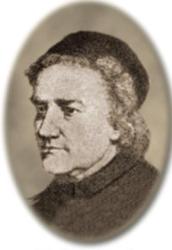
Otto Shtern
 USA
USABiography of Otto Stern
Otto Stern was a German-American physicist who made significant contributions to the field of molecular beams and quantum mechanics. He was born in Sorau, Germany (now Zory, Poland) and was the oldest of five children. His parents, Oscar Stern and Eugenie Stern (nee Rosental), came from wealthy families involved in the milling and grain trading business. When Stern was four years old, the family moved to Breslau (now Wroclaw), where he completed his primary and secondary education. Stern was a diligent student and had a strong passion for learning, encouraged by his parents who actively supported his reading habits.
After finishing school, Stern, financially independent due to his parents' wealth, spent several years studying natural sciences under the guidance of professors from the Universities of Freiburg, Munich, and other institutions. In 1912, he defended his doctoral dissertation in physical chemistry at the University of Breslau. During his years of study, Stern established contacts with prominent physicists and chemists of that time. Lectures by Arnold Sommerfeld sparked his interest in theoretical physics, and lectures by Otto Lummer and Ernst Pringsheim sparked his interest in experimental physics. However, the works of Ludwig Boltzmann, Rudolf Clausius, and Walther Nernst on molecular theory, statistical mechanics, and thermodynamics made such a strong impression on him that he chose to pursue research in the field of physical chemistry. Moreover, his favorite professors at the physical-chemical faculty of the University of Breslau, including Otto Sackur, were actively involved in research in this area. Through Sackur's connection with Fritz Haber, a friend of Albert Einstein, Stern secured Einstein's supervision for his doctoral work at the University of Prague in 1912. From Einstein, he learned a great deal about the latest developments in physics, and they even co-authored a paper. When Einstein moved to Zurich the following year, Stern followed him. Working with Einstein, he became a privatdozent (non-salaried lecturer) at the Federal Polytechnic School in Zurich.
With the outbreak of World War I, Stern was drafted into the German army and sent to Poland as part of a meteorological unit responsible for weather observations. Despite his military duties, he continued his theoretical research, particularly the work he started with Nernst. He applied quantum theory and statistical mechanics to problems in thermodynamics and even published a paper. Later during the war, Stern and several other scientists were transferred to Nernst's laboratory at the University of Berlin, where they conducted various research projects commissioned by the Ministry of War. In Berlin, Stern collaborated with Max Born, James Franck, Max Volmer, and others. Under the influence of discussions with skilled experimenters Franck and Volmer, Stern's interests shifted from theoretical research to the field of experimentation.
After the war, Born became the director of the Institute of Theoretical Physics at the University of Frankfurt and invited Stern to join his team as an assistant. Stern and Born published a theoretical work on the surface energy of solid bodies, but soon Stern became captivated by the problem of experimental verification of the molecular motion theory developed in the mid-19th century. James Clerk Maxwell, a renowned Scottish physicist, based on theoretical considerations, showed that gas molecules are in continuous chaotic motion and derived a formula for their velocity distribution. Maxwell's results received universal recognition but were not directly confirmed experimentally. Stern decided to use the molecular beam method invented by French physicist Louis Dunoyer in 1911.
Stern designed an experimental setup consisting of a small furnace that evaporated silver atoms from a metallic sample (vapor molecules contain only one atom), a slit through which atoms moving towards the aperture entered a vacuum chamber, and another slit located further from the furnace outlet in the path of the atoms, allowing them to form a thin beam. By placing two slits in the path, spaced apart, Stern created conditions where the atoms passing through both slits had the same velocity direction, and the low density of gas in the vacuum chamber reduced the likelihood of collisions, and therefore, deviation of atoms and scattering of the beam. The velocities of the atoms that passed through the second slit and the number of atoms at each velocity were measured using various methods. One of the methods, although not the most accurate, involved placing toothed wheels in the path of the beam. When the wheels rotated, atoms that managed to pass between the teeth of the first wheel could only pass between the teeth of the second wheel if the gap between them was aligned with the atoms' flight path. Knowing the width of the gap, the rotation speed, and the distance between the wheels, Stern could calculate the velocity of the atoms that passed between them. The measurements, completed in 1920 (and refined in subsequent years), confirmed the theoretical predictions. The Stern method turned out to be a powerful means of observing invisible particles using relatively crude laboratory instruments but required exceptional skill from the experimenter. Stern turned to his colleague at Frankfurt, Walther Gerlach, for help in investigating the magnetic moments of atoms using the same method. Since atoms contain moving electrically charged particles, and the movement of charged particles is nothing but electric current, atoms behave like tiny magnets (similar to the current in a coil that creates a magnetic field in an electromagnet). The magnetic moment determines the intensity and direction of the magnetic field. Classical physics suggests that the magnetic moment can have any direction. Based on quantum theory, Sommerfeld predicted that the magnetic moment can have only two directions relative to the external field: coincide with the direction of the external field or be directed in the opposite direction. In the well-known Stern-Gerlach experiment, a molecular beam passes between the poles of a non-uniform magnet, which causes the beam to deflect. Classical theory predicted that the deflection of atoms with different magnetic moment directions would be distributed continuously, resulting in a simple widening of the narrow beam. Quantum theory predicted that atoms would only be deflected in one of two ways, i.e., the beam would split into two. The Stern-Gerlach experiment, performed in 1921, unequivocally confirmed the validity of the quantum theory.
In 1921, Stern was appointed a professor of physics at the University of Rostock, and in 1923, he became a full professor at the University of Hamburg. In Hamburg, with a laboratory specially built for molecular beam research at his disposal, he used this method to test a prediction made by Louis de Broglie in 1924. Both quantum theory and the experiment showed that electromagnetic radiation, such as light, possesses both particle-like (quanta) and wave-like properties. Despite skepticism from many physicists, de Broglie, assuming that particles must have wave-like properties, suggested the corresponding wavelengths. In 1927, Clinton J. Davisson and Lester Germer experimentally demonstrated (partly by accident) the existence of de Broglie waves for electrons. Their experiment was followed by supporting experiments by G.P. Thomson. A few years later, Stern directed a beam of helium atoms through toothed wheels (to measure the speed of particles, which determines the de Broglie wavelength) onto the surface of a lithium fluoride crystal and observed diffraction - a wave phenomenon. Knowing the distance between the atoms in the crystal, he determined the wavelength for helium particles, which agreed with de Broglie's formula. The evidence for the wave properties of such large particles as atoms seemed even more convincing than in the case of electrons, and Stern's experiment played an important role in the further development of quantum mechanics. In the following years, Stern, together with Immanuel Estermann and O.R. Frisch, measured the magnetic moment of the proton (the nucleus of a hydrogen atom) and, to his surprise (and the surprise of all physicists), discovered that it was twice as large as predicted by P.A.M. Dirac. Shortly after Hitler became the Chancellor of Germany in 1933, Estermann and other Jewish scientists were dismissed from the University of Frankfurt based on Nazi anti-Semitic laws. Although Stern was Jewish, his service in the German army during World War I protected him from racist laws for a while. However, in protest, he resigned and, along with Estermann, accepted an invitation from the physics faculty of the Carnegie Institute of Technology. There, as a research professor, he helped establish a molecular beam laboratory. In 1939, Stern obtained American citizenship and, when the United States entered World War II, he served as a consultant to the U.S. Department of Defense.
In 1943, no Nobel Prize was awarded, but the following year Stern was awarded the Nobel Prize in Physics for 1943 "for his contribution to the development of the molecular beam method and for his discovery and measurement of the magnetic moment of the proton". Due to the wartime conditions, the traditional Nobel Prize ceremony did not take place, and the prize was presented to Stern during a breakfast organized by the American-Scandinavian Foundation at the Waldorf-Astoria hotel in New York. Stern delivered his Nobel lecture, "The Method of Molecular Rays", in 1946. After leaving the Carnegie Institute of Technology in 1946, Stern moved to Berkeley, California, where his two sisters lived. While keeping in touch with the physics community and monitoring developments in elementary particle physics, he lived in relative isolation. Regularly visiting Europe, Stern refused to set foot on German soil and receive a pension from the German government.
In his final years, Stern, who never married, developed a taste for fine dining and cigars. He enjoyed going to the movies. He died of a heart attack in a movie theater in Berkeley. According to Emilio Segre, "Stern was one of the greatest physicists of the 20th century. He wrote relatively few articles, but the ones he wrote had such power!" Stern was a member of the American National Academy of Sciences and the American Philosophical Society, and he received honorary doctorates from the University of California and the Swiss Federal Institute of Technology.