Paul Dore
 France
- Gustave Doré: A Renowned French Artist
- Artistic Breakthrough in Paris
- Versatile Artistic Endeavors
- Salon Success and Publishing Ventures
- Anti-Russian Pamphlet and Literary Collaborations
- Theatrical and Literary Masterpieces
- International Recognition and "London: A Pilgrimage"
- Late Years and Legacy
Gustave Doré: A Renowned French Artist
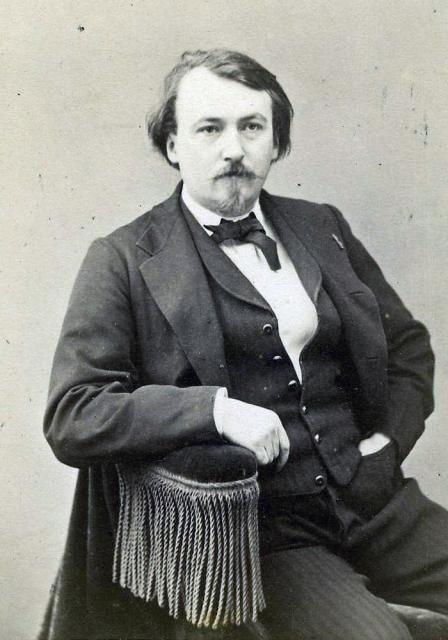
Early Life and InfluencesGustave Doré was born into a family of builders in 1832. His exceptional drawing skills were evident from a tender age. In 1841, the family relocated to Bourges, an experience that profoundly influenced Doré's artistic style.
Artistic Breakthrough in Paris
In 1847, Doré moved to Paris, where he presented his drawings to the editor of "Journal pour Rire." Impressed, the editor hired him. In the same year, his "Labors of Hercules" lithographs debuted, showcasing the talent of a 15-year-old artist with no formal training.
Versatile Artistic Endeavors
Without receiving formal art education, Doré immersed himself in the study of paintings and engravings at the Louvre and National Library. He balanced his work between graphics, painting, and graphics again.
Salon Success and Publishing Ventures
In 1848, Doré exhibited his works at the prestigious Salon. Four years later, he severed his ties with "Journal pour Rire" and began illustrating affordable publications. In 1853, he illustrated Byron's works, and in the same year, his illustrations for the Bible gained prominence.
Anti-Russian Pamphlet and Literary Collaborations
The outbreak of the Crimean War in 1854 inspired Doré to create "A History of Holy Russia," an anti-Russian military pamphlet. That year, he also illustrated "Gargantua and Pantagruel" and released "Paris Zoo," a collection of satirical drawings of Parisian life. His illustrations for Balzac's "Droll Stories" appeared in 1855.
Theatrical and Literary Masterpieces
In 1858, Doré contributed to the scenic design of Offenbach's "Orpheus in the Underworld" at the Théâtre des Bouffes-Parisiens. The 1860s saw his illustrations for Dante's "Inferno" and "Paradise," Charles Perrault's fairy tales, and the adventures of Baron Munchausen and Don Quixote.
International Recognition and "London: A Pilgrimage"
In 1867, a London exhibition showcased Doré's artwork. Two years later, he began collaborating with Blanchard Jerrold. Inspired by Rowlandson and Ackermann's "Microcosm of London," they conceived of a comprehensive depiction of London. Doré's "London: A Pilgrimage" with 180 illustrations was published in 1872 but received mixed critical reception.
Late Years and Legacy
In the 1870s, Doré produced engravings for "Versailles and Paris" and illustrated a history of Spain. His three-volume illustrations for Dante's "Divine Comedy" (1874-1879), published by Russian publisher Wolf, solidified his reputation as one of the greatest illustrators of the 19th century. Known for his masterful play of light and shadow, Gustave Doré was laid to rest at the Père Lachaise Cemetery.