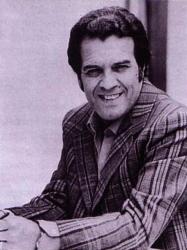
Paul Franz
 France
Biography of Paul Franz
Paul Franz was a French opera singer, a tenor, who was born in 1876 in Paris, France. He was the eldest of three children in his family. Not much is known about his childhood or where he started studying music. It is known, however, that before his opera career, he worked on the railroad, which made him incredibly resilient and proved beneficial to him on stage. In his free time, he sang as an amateur, demonstrating a good baritone voice while performing in various church choirs and small amateur theaters.
One day, a tenor from the Opera Comique theater happened to witness one of his performances and recommended that Paul focus on pursuing a career as a tenor instead of a baritone. Encouraged by this feedback, Paul decided to try his luck and apply to the Paris Conservatory several times, but he was always rejected.
Success and Career
Paul Franz's luck finally changed in 1907 when he won a vocal competition organized by the music and theater newspaper 'La Comoedia'. The first prize of the competition included a full scholarship to the conservatory, and Paul was finally accepted as a student. Grateful for this opportunity, he excelled in his studies, not only focusing on vocal techniques but also showing a keen interest in music as a whole and becoming an excellent pianist. By that time, his voice was already quite strong and only needed some polishing. As a result, Franz secured a position as a tenor at the famous Paris Opera.
He made his debut in 'Lohengrin' on February 1, 1909, and was warmly received by both critics and audiences. One critic even wrote about him: "His potential is unlimited." Franz sang in Paris for 30 seasons, becoming the leading tenor of the company. He had a clear preference for Wagner's repertoire and excelled in roles in operas such as 'Das Rheingold' and 'Die Meistersinger von Nürnberg'. It was said that he had no equal as Siegfried.
In 1910, Paul Franz first appeared in London in 'Samson et Dalila', receiving praise from the composer Camille Saint-Saens himself, who exclaimed, "What an artist! This is a magnificent tenor, a giant! He plays the role exactly as I wanted it to be played!" He returned to England for the following four seasons until 1914 when the war made these trips impossible.
Despite his success in France, Franz also gained recognition abroad. In 1915, he performed at La Scala, and in 1918, he appeared at the Teatro Colón in Buenos Aires. Unfortunately, he never had the opportunity to perform in Bayreuth due to the outbreak of war in Europe.
Legacy
Unlike many French opera singers of his time, Paul Franz did not aspire to an international career. He was content with his success in his home country. However, it is believed that he was unjustly overlooked by the rest of the opera world. Despite winning the hearts of his fellow countrymen, he remained in the shadow for the rest of the opera world as one of the best Wagnerian tenors.
Paul Franz passed away on April 24, 1950. Recordings of his voice from 1909 to 1932 can still be heard on 'HMV', 'Pathé', and 'Columbia'.