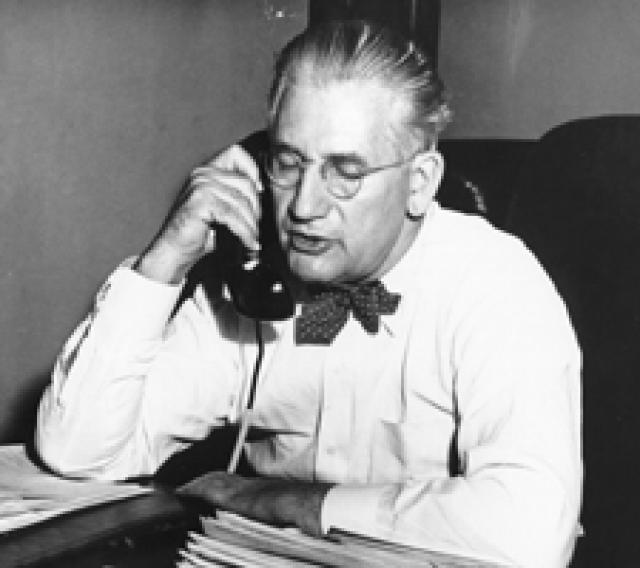
Paul Howard Douglas
 USA
USA- Biography of Paul Howard Douglas
- Career and Political Involvement
- Political Career and Advocacy
- Later Life and Legacy
Biography of Paul Howard Douglas
Early Life and EducationPaul Howard Douglas, an American politician and economist, was born on March 26, 1892, in Salem, Massachusetts. When he was four years old, his mother passed away and his father remarried. Unfortunately, Douglas' stepmother was abusive, leading to his removal from his father's household. He and his older brother were taken in by their stepmother's family in Onawa, Maine, where they lived on a forest resort built by their uncle and great-uncle.
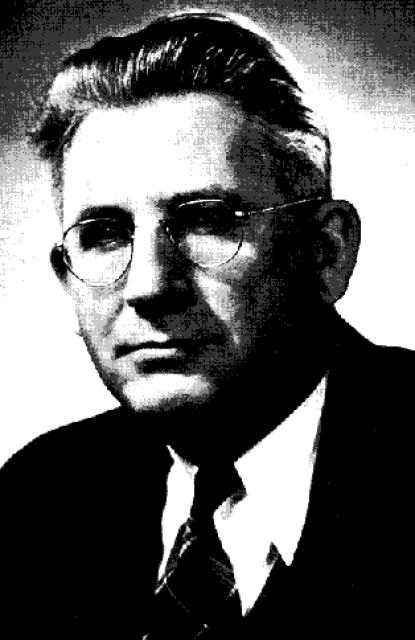
Douglas graduated from the prestigious Bowdoin College in 1913. He then became a student at Columbia University in New York, where he earned a master's degree in 1915 and a doctorate in economics in 1921. During this time, he married Dorothy Wolff, who was also pursuing a doctoral degree at Columbia.
Career and Political Involvement
From 1915 to 1920, Douglas moved around frequently, studying at Harvard University, teaching at the University of Illinois and Reed College, mediating labor disputes for the "Emergency Fleet Corporation" in Pennsylvania, and teaching at the University of Washington. In 1919, he obtained a teaching position at the University of Chicago. However, his wife was unable to secure a job at the same university due to strict rules against employing relatives. Consequently, they moved to Massachusetts, where Douglas taught at the University of Massachusetts Amherst.
In the early 1930s, Douglas developed an interest in politics. Initially, he served as an economic advisor to the governors of Pennsylvania and New York, actively campaigned against corruption, and helped draft legislation regulating utility rates, pension sizes, and unemployment insurance. Eventually, he ran for office himself as an independent candidate. In 1942, Douglas joined the Democratic Party.
During World War II, Douglas used his influential connections to enlist in the Marine Corps at the age of 50. Unsatisfied with non-combat assignments, he organized his own deployment to the Pacific theater of war. He returned as a lieutenant colonel with injuries, a wounded left arm, and two Purple Hearts.
Political Career and Advocacy
Following the war, Douglas successfully ran for the U.S. Senate. He campaigned extensively, traveling throughout the state and highlighting issues that could be addressed through political pressure. Douglas secured victory over his Republican opponent by a margin of 33,600 votes. As a senator, Douglas became known for his passionate advocacy for civil rights, environmental protection, public housing, and credit reform.
In 1966, at the age of 74, Douglas lost his bid for re-election to Republican Charles Percy and retired from politics. He continued his academic career, teaching at the New School in New York and serving as chairman of the Housing Commission. He also dedicated time to writing books, including his autobiography.
Later Life and Legacy
In the early 1970s, Douglas suffered a stroke, leading to his withdrawal from public life. He passed away on September 24, 1976, at his home. Paul Howard Douglas left behind a lasting legacy as a prominent politician, economist, and advocate for social and environmental issues.


