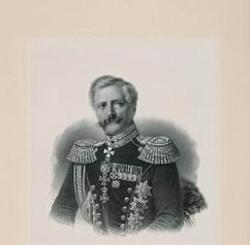
Paul Mauser
 Germany
- Early Life and Apprenticeship
- Military Service and Early Innovations
- Partnership and Patent
- Founding of Mauser & Co.
- Weapon Innovations
- Mauser K-86 and K-96 Pistols
- International Recognition and Legacy
- Post-World War I Production
- Conclusion
Early Life and Apprenticeship
Paul Peter Mauser was born on June 27, 1838, in Oberndorf am Neckar, Germany, to Andreas Mauser, a gunsmith. Inspired by his father's craft, Mauser began working in a state arms factory at the age of 12.

Military Service and Early Innovations
After completing elementary school in 1852, Mauser enlisted in the military in 1859, serving as an artilleryman in the Ludwigsborg Armory. During his military service, he experimented with weapon designs, including a small breech-loading cannon and an improved version of the Dreyse needle gun.

Partnership and Patent
In 1868, Mauser, his brother Wilhelm, and the American Charles Naris patented a breech-loading rifle with a leaf spring in the bolt handle. This rifle was adopted by the Prussian army in 1871.
Founding of Mauser & Co.
After obtaining the government arms factory in 1874, Mauser founded the company "Gebrüder Mauser und Cie." (Mauser Brothers and Co.).
Weapon Innovations
Mauser's firm became renowned for its innovative designs. In 1877, they released a 9mm single-shot pistol with a vertically sliding bolt. In 1878, they developed a revolver with a break-open frame that allowed for simultaneous ejection of spent cartridges.
Mauser K-86 and K-96 Pistols
In 1886, the company introduced the K-86 pistol with a tubular magazine under the barrel, and in 1895, they collaborated with the Federle brothers and master craftsman Geizer to create the K-96 pistol, first produced in 1896. The K-96 underwent numerous revisions, including modifications to barrel length and magazine capacity. The 1912 model, chambered in both 7.63mm and 9mm Mauser, became a classic.
International Recognition and Legacy
Mauser rifles and pistols achieved international acclaim. The Mauser rifle, adopted by the Prussian army in 1898, became as popular as the K-96 pistol. Mauser received numerous domestic and foreign honors, including the title of commercial councilor and the Prussian Order of the Third Class. In 1912, he was elevated to the German nobility as von Mauser.
Post-World War I Production
After World War I, Mauser continued to produce firearms. In 1932, they revived the production of the K-96 pistol in models 711 and 712, with the 712 capable of automatic fire.
Conclusion
Paul Peter Mauser's legacy as a renowned gunsmith continues to this day. His innovations and the success of Mauser arms left an indelible mark on the history of firearms.