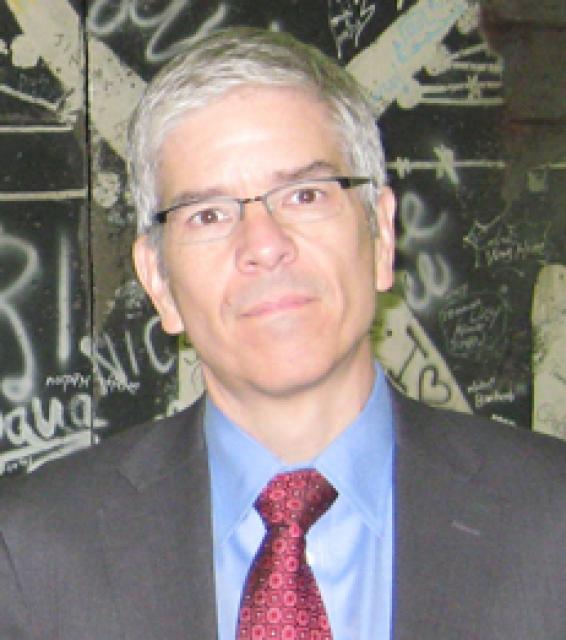
Paul Michael Romer
 USA
USABiography of Paul Michael Romer
Paul Michael Romer is an American economist, entrepreneur, and public figure. He is currently a professor at the New York University Stern School of Business, and is expected to become a permanent faculty member in 2011. Romer has previously held positions at the Stanford University's Center for International Development, the Stanford Institute for Economic Policy Research, and the Center for Global Development.

Romer is considered an expert in the field of endogenous growth theory. He is the son of Roy Romer, the former governor of Colorado. In 1977, Romer graduated with a bachelor's degree in physics, and in 1983, he earned his Ph.D. in economics from the University of Chicago. Throughout his career, Romer has worked at the University of California, Berkeley, the University of Chicago, and the University of Rochester.
In 1997, Romer was named one of the "25 most influential people in America" by TIME magazine. In 2000, he founded his own education company, Aplia, which was later acquired by Cengage Learning in 2007. Romer has received several prestigious awards for his scientific contributions, including the Horst Claus Recktenwald Prize in Economics, which was presented to him in Nuremberg, Germany.
Romer's most important work focuses on the economics of growth. Economists around the world have been studying this field since the 1950s and have made significant discoveries. For example, Robert Solow demonstrated that technological progress plays a crucial role in increasing productivity. Romer has published articles on various aspects of mathematical economics and has shown that technological changes are primarily the result of deliberate actions, such as the organization of research laboratories.
Romer is famously known for his statement, "A crisis is a terrible thing to waste." Originally, he spoke about the rapid growth in education levels worldwide compared to the United States. However, the phrase later took on a different interpretation due to the global financial crisis. One of Romer's recent projects involves the development of charter cities, which he believes can play a significant role in economic development. He also discusses the potential for developing nations to accelerate their growth by making intelligent choices in development mechanisms.
Romer compares the process of economic growth to cooking. He argues that growth involves redistributing existing resources to create more valuable products. However, constantly preparing the same dish will eventually deplete the necessary resources. Romer emphasizes that the secret to success lies in finding new and better recipes, rather than intensifying the cooking process.


