
Vilfredo Pareto
 Italy
Italy- Biography of Vilfredo Pareto
- Contributions to Economics and Sociology
- Pareto's Law and Sociological Theories
- Influence and Legacy
Biography of Vilfredo Pareto
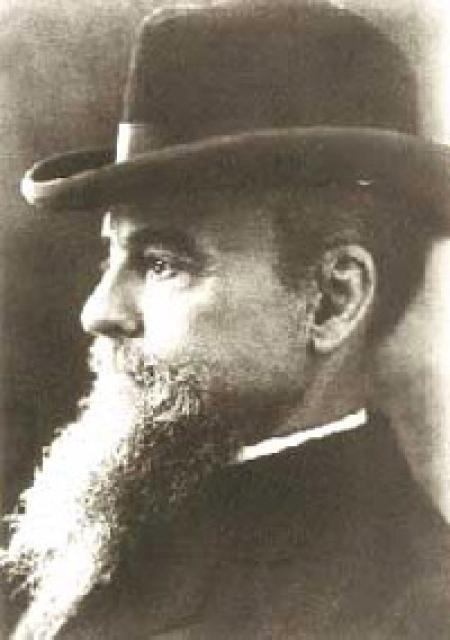
Vilfredo Pareto, an Italian economist and sociologist, is best known for his research on income distribution, commonly referred to as "Pareto's law". He was born on July 15, 1848, in Paris, France, but his parents moved to Italy when he was ten years old. After graduating from the University of Turin in 1869, where he studied mathematics and physics, Pareto began working as an engineer for a railway company.
Contributions to Economics and Sociology
In his early articles, Pareto embraced the idea proposed by Léon Walras that economics is a mathematical science. When Walras retired from his position as a professor of economics at the University of Lausanne in Switzerland in 1893, Pareto was chosen as his successor. During this period, he published several books, including "Course of Political Economy" (1896-1897), "Socialist Systems" (1902-1903), and "Manual of Political Economy" (1906).
Pareto's most famous work, "Treatise on General Sociology", was published in 1916. In this book, he collected materials that he had been gathering over the years. His final work, "Compendium of General Sociology", was published in 1920.
Pareto's Law and Sociological Theories
Pareto is well-known for his theory on income distribution, commonly referred to as "Pareto's law". He also developed theories on human actions, introducing the concepts of "residues" and "derivatives". Additionally, he formulated the theory of elites, suggesting that a significant portion of social actions is not driven by logic but by the desire to give irrational acts a semblance of rationality. He believed that individuals are motivated by both instinctual "residues" and rationalized "derivatives" of these residues.
According to Pareto, the history of humanity is a succession of changing moods among the elite. Leaders with a lion-like psychology, inclined towards conservatism, may come to power. However, gradually, the philosophy of foxes, i.e., individuals inclined towards risk-taking, spreads among the elite. These "foxes" bring society to a crisis, leading to the return of conservatives to power. Pareto believed that the use of force could break this cycle, but the elite gradually becomes weaker and seeks to avoid violence.
Influence and Legacy
Pareto's theories had a significant impact and resonated with Benito Mussolini, who awarded him the title of senator in 1922. Vilfredo Pareto passed away on August 20, 1923, in Céligny, near Geneva, leaving behind a legacy of contributions to economics and sociology.


