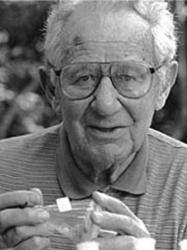
Paul Walden
 Russia
- Early Life and Education
- Academic Career
- Groundbreaking Discoveries and Recognition
- Career in Russia and Germany
- Later Years and Legacy
Early Life and Education
Paul Walden was born on July 14, 1863, in the Rozulas district of Livonia, then part of the Russian Empire. He came from a peasant family and was orphaned at a young age. With support from his older brothers, he pursued his education. In 1876, he graduated from the county school in Cesis with honors, and in 1882, from the Riga Technical High School.
Academic Career
In December 1882, Walden enrolled in the Riga Polytechnic Institute. He became fascinated with chemistry and published his first scientific paper in 1886. In 1887, he joined the Russian Physico-Chemical Society and collaborated with Wilhelm Ostwald. In 1888, Walden earned a degree in chemical engineering and became an assistant in chemistry, compiling a "Stereochemical Handbook" published in 1894.
Groundbreaking Discoveries and Recognition
Walden's groundbreaking discovery was the Walden inversion or inversion. In 1892, he became an assistant professor of physical chemistry, and in 1894, a professor of analytical and physical chemistry at the Riga Polytechnic Institute. His research on electrochemistry of non-aqueous solutions brought him recognition. He was nominated for the Nobel Prize in Chemistry in 1913 and 1914.
Career in Russia and Germany
In 1910, Walden became a member of the St. Petersburg Academy of Sciences. In 1911, he moved to St. Petersburg, where he headed the chemical laboratories of the academy. Due to political unrest in Latvia, Walden relocated to Germany in 1919 and became a professor of inorganic chemistry at the University of Rostock.
Later Years and Legacy
Despite offers from Latvia and Russia, Walden remained in Germany. In 1927, he became a foreign honorary member of the Academy of Sciences of the USSR. His vast collection of over 10,000 volumes on the history of chemistry was tragically destroyed during the bombing of Rostock in 1942. Walden passed away in Frankfurt on January 22, 1957, at the age of 93. He is remembered for his significant contributions to chemistry, especially his work on stereochemistry, electrochemistry, and optical isomerism.