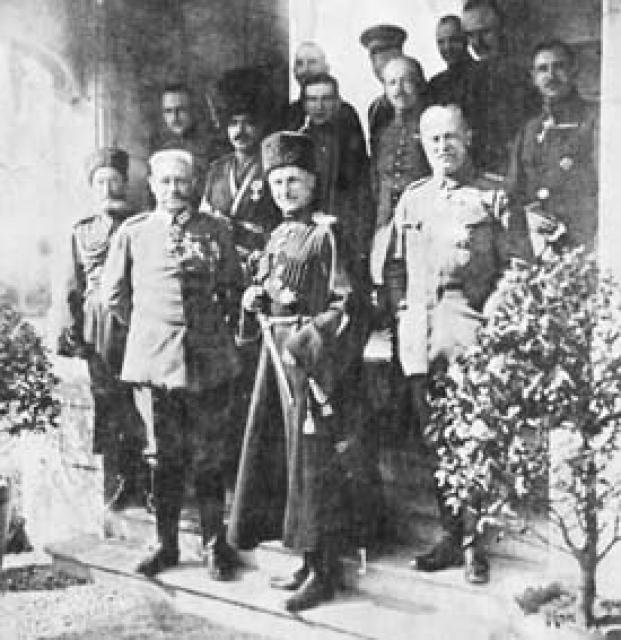
Pavel Skoropadskiy
 Ukraine
- Pavel Skoropadsky: A Ukrainian Military and Political Leader
- Military Service:
- - 1910-1911: Commanded the 20th Dragoon Regiment of Finland
- 1916:Promoted to lieutenant general
- Establishment of the Ukrainian State
- Internal and External Policies
- - Restored pre-revolutionary property rights and economic freedoms
- External Policies:
- Fall of the Hetmanate and Exile
- December 14, 1918:Resigned as Hetman and fled Kiev
- World War II and Death
Pavel Skoropadsky: A Ukrainian Military and Political Leader
Early Life and Military CareerBorn:May 3 (15), 1873, in Wiesbaden, Germany
Family:
- Father: Pyotr Ivanovich Skoropadsky, a large landowner and colonel in the Russian army

- Mother: Maria Andreevna Miklashevskaya, from an ancient Cossack family
Education:Completed the St. Petersburg Page Corps, receiving the rank of cornet
Military Service:
- 1893: Commander of a squadron in the Cavalry Guards Regiment- 1895: Regimental adjutant
- 1897: Promoted to lieutenant
- 1898: Married Alexandra Petrovna Durnovo, daughter of the governor-general of Moscow
- 1905: Promoted to colonel, appointed aide-de-camp to Emperor Nicholas II
- 1910-1911: Commanded the 20th Dragoon Regiment of Finland
- 1911: Commander of the Life Guards Horse Regiment- 1912: Promoted to major general
World War I and the Ukrainian National Movement
1914-1916:Commanded the 1st Brigade of the 1st Guards Cavalry Division and later the 3rd and 5th Guards Cavalry Divisions
1916:Promoted to lieutenant general
January 1917:Assumed command of the 34th Army CorpsThe Ukrainian Revolution and Ghetmanate
Post-February Revolution:Navigated the complex political landscape of Ukraine, balancing the demands of the Russian Provisional Government and the Ukrainian Central Rada
July 15, 1917:Ukrainianized his corps, naming it the "1st Ukrainian Corps"
October 6, 1917:Elected Ataman by the Congress of Free Cossacks in Chigirin
November 7 (20), 1917:Appointed Commander-in-Chief of the armed forces of the newly proclaimed Ukrainian People's Republic
December-January 1917-1918:Fought against Bolshevik-influenced forces, preventing the establishment of Soviet power in Ukraine
Establishment of the Ukrainian State
April 29, 1918:Proclaimed "Hetman of All Ukraine" at the Congress of Bread Producers
Dissolution of the Central Rada:Dissolved the Ukrainian Central Rada under the order of Field Marshal Erich Ludendorff
Creation of the Ukrainian State:Established an independent Ukrainian state with a constitution, national currency, military divisions, and an autonomous Ukrainian Church
Internal and External Policies
Domestic Policies:- Reinstated the institution of Hetmanate and revived Cossack traditions
- Restored pre-revolutionary property rights and economic freedoms
- Supported Russian officer organizations but opposed the creation of large Russian military formations
External Policies:
- Allied with Germany and its allies- Secured recognition from the Entente and neutral countries
- Formed a military alliance with the Don and Kuban Cossack governments
Fall of the Hetmanate and Exile
November 1918:Insurrection led by Ukrainian nationalists forced the collapse of the Hetmanate
December 14, 1918:Resigned as Hetman and fled Kiev
1918-1945:Lived in Germany as a leading figure of the Ukrainian monarchist movement
World War II and Death
During WWII:Collaborated with Nazi GermanyApril 1945:Fled Berlin but was mortally wounded in an airstrike
April 26, 1945:Died in a hospital in Metten, Bavaria




