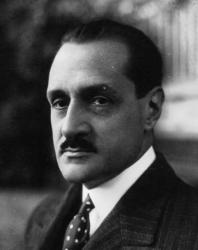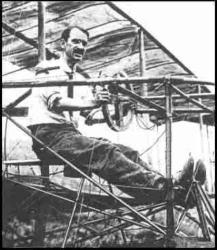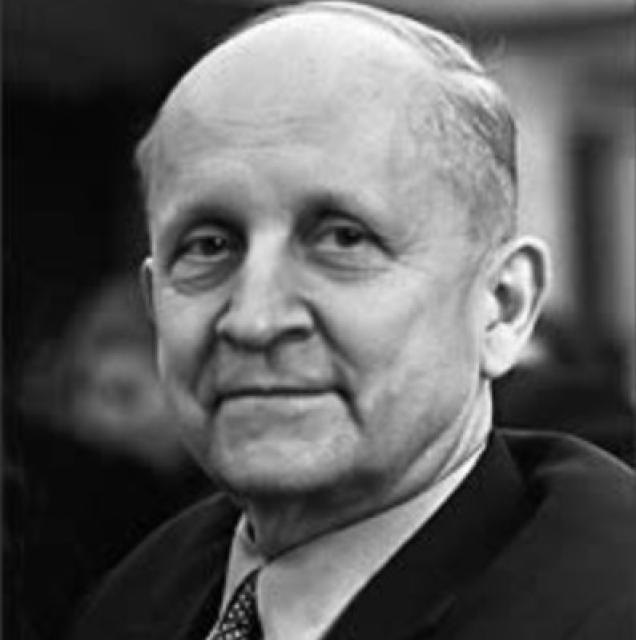
Pavel Syhoi
- Pavel Sukhoi: A Titan of Soviet Aviation
- Military Service and Early Career
- Contributions to Aircraft Design
- Leadership of Sukhoi Design Bureau
- Pioneering Reactive Aviation
- Post-War Innovations
- Achievements and Honors
- Legacy and Commemoration
Pavel Sukhoi: A Titan of Soviet Aviation
Early Life and EducationPavel Osipovich Sukhoi was born on July 22, 1895, in the village of Glubokoye, Russian Empire. His passion for aviation ignited in 1914 when he witnessed the flight of a Farman aircraft. Inspired by articles from renowned aerodynamicist Nikolai Zhukovsky, Sukhoi embarked on a career in aviation. In 1915, he enrolled in the Moscow Higher Technical School and joined an aeronautics club.
Military Service and Early Career
During World War I, Sukhoi served as a military officer and participated in combat operations. After the war, he resumed his education and graduated from the Moscow Higher Technical School in 1925. He began his career as an engineer-constructor at Tupolev Design Bureau and later became its Deputy Chief Constructor.
Contributions to Aircraft Design
Sukhoi's early contributions included the I-4 and I-14 fighter planes, as well as the record-breaking ANT-25 and ANT-37bis "Rodina" aircraft. He played a pivotal role in the development of the Ivanov fighter, which evolved into the multi-purpose Su-2 aircraft that saw significant action during World War II.
Leadership of Sukhoi Design Bureau
In 1940, Sukhoi became the Chief Constructor of his own design bureau, which later became the renowned Sukhoi Design Bureau. He also directed factories in Moscow and its suburbs. One of his notable achievements during this period was the Su-6 armored attack aircraft.
Pioneering Reactive Aviation
Sukhoi was among the first Soviet engineers to embrace reactive aviation. He designed several experimental jet fighters, paving the way for the development of supersonic aircraft.
Post-War Innovations
After the war, Sukhoi's leadership resulted in the creation of a series of combat aircraft, including the Su-7 (with twice the speed of sound), the Su-9, Su-11, and Su-15 interceptors, the Su-7B and Su-17 fighter-bombers, the Su-24 tactical bomber, and the highly successful Su-25 attack aircraft.
Achievements and Honors
Over his five decades of service, Sukhoi conceived over 50 original aircraft designs, many of which showcased exceptional flight and combat capabilities. He received numerous awards and recognitions, including two Heroes of Socialist Labor medals, the Lenin Prize, the Stalin Prize, and the State Prize. Sukhoi was also a doctor of technical sciences and a professor.
Legacy and Commemoration
Pavel Sukhoi passed away on September 15, 1975, in Moscow. His name lives on in the Sukhoi Design Bureau, now a major Russian aviation holding company. Numerous streets, schools, and monuments in Russia and Belarus honor his legacy. The Sukhoi Design Bureau continues to develop and produce cutting-edge combat aircraft, making it a global leader in aviation technology.