Penny Wong
 Australia
- A new home and an early sense of difference
- From advocacy to the Senate
- A Senate leader and diplomat
- Family and public life
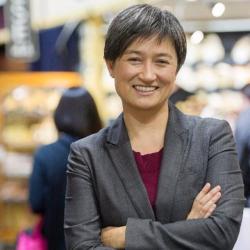
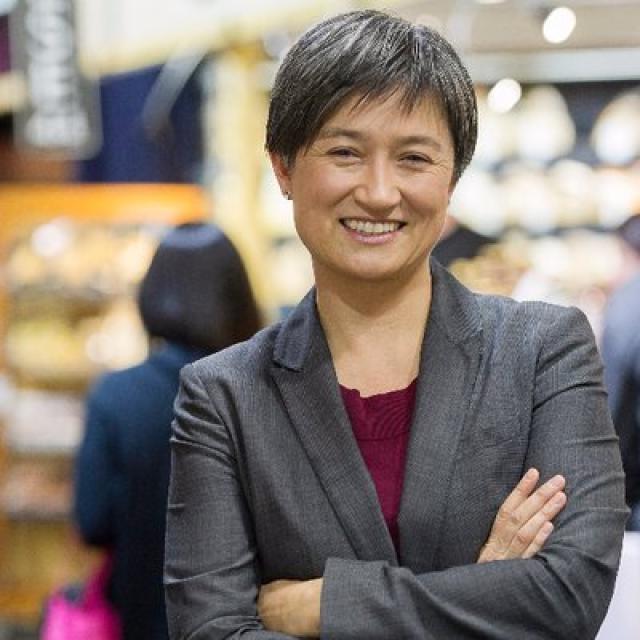
Penny Wong’s rise to Australia’s foreign affairs portfolio began far from Canberra, in Kota Kinabalu, Malaysia, and took shape in Adelaide, where her family settled when she was eight. A lawyer and union advocate before entering politics, she became one of the most influential figures in the Senate and a trailblazer in Australian public life: the country’s first Asian-born federal cabinet minister and its first openly LGBTQI cabinet member. Her career has moved from climate policy and national budgets to diplomacy across the Indo-Pacific, while her public story has remained closely tied to questions of belonging and representation.
A new home and an early sense of difference
Born on November 5, 1968, Wong moved with her family to Australia in 1976. She has recalled that arriving in Adelaide felt disorienting: the climate, light and landscape were unfamiliar, and at school she encountered racist remarks. Those experiences shaped her sense of what it meant to be included in national life. Years later, she described how seeing an Australian identity that embraced the country’s place in Asia helped her feel that she belonged.
Wong attended Scotch College in Adelaide and studied arts and law at the University of Adelaide, later completing legal practice training. While still a student she became active in the Australian Labor Party, taking on party roles in South Australia through the 1980s and 1990s. Her first professional work was as an industrial officer for the furniture workers’ union, where she represented employees and campaigned over pay and conditions, including for low-paid migrant women in upholstery workshops.
From advocacy to the Senate
Wong moved to New South Wales to work as an adviser to the state Labor government, helping develop forests policy. She later practised as a barrister and solicitor and worked as a legal officer. In 2001 she won election to the Australian Senate for South Australia, taking her seat the following year. Her arrival broke new ground in federal politics: she was the first Asian-born person elected to the Australian Cabinet and, when appointed, the first openly LGBTQI member of a federal cabinet.
After Labor’s victory in 2007, Prime Minister Kevin Rudd appointed her Minister for Climate Change and Water. The brief placed her at the centre of a major national debate over emissions and energy. Her work included expanding the Renewable Energy Target and developing the government’s proposed emissions trading scheme. She represented Australia in international climate negotiations, including the 2009 Copenhagen conference, where climate policy became an intense test of domestic politics and international diplomacy.
In 2010, after Labor’s return to government, Wong became Minister for Finance and Deregulation. She worked with Treasurer Wayne Swan on three federal budgets in the aftermath of the Global Financial Crisis. It was a different kind of pressure from climate negotiations: close management of public spending, competing priorities and the task of maintaining parliamentary support for the government’s program.
A Senate leader and diplomat
In 2013, Wong became Leader of the Government in the Senate, the first woman to hold that role. After Labor lost office later that year, she became Leader of the Opposition in the Senate, again the first woman in the position. She led the party’s Senate work for nearly nine years, first as a trade spokesperson and then, from 2016, as Shadow Minister for Foreign Affairs. Her long opposition tenure made foreign policy the next chapter of her public career.
When Labor won the 2022 election, Wong was appointed Minister for Foreign Affairs and again became Leader of the Government in the Senate. Her work has emphasized Australia’s relationships with its Pacific and Southeast Asian neighbours, regional stability, sovereignty and the rules governing relations between states. The role has also brought her back to Malaysia: a visit to Kota Kinabalu connected the country’s chief diplomat with the city where her own life began.
Family and public life
Wong lives in Adelaide with her wife, Sophie Allouache, and their daughters. She married Allouache in 2024. Although she has generally kept family life private, she has spoken candidly about the weight of being “the first” Asian-Australian minister and the pressure she felt not to make a mistake that might be used to question her competence. For Wong, representation has never been only symbolic: she has described it as a way of widening the space for people who once struggled to see themselves reflected in Australia’s institutions.