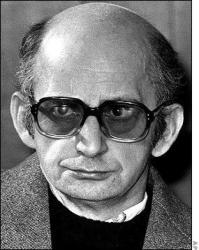
Peter Kurten
 Germany
- Biography of Peter Kürten
- Early Criminal Activities
- Series of Murders
- Capture and Trial
- Execution and Legacy
Biography of Peter Kürten
Early Life and ChildhoodPeter Kürten, often referred to as the Vampire of Düsseldorf, was a German serial killer who committed a series of crimes in the early 20th century. He was born on May 26, 1883, in a poor and abusive family in the city of Mülheim am Rhein. He was the third of 11 children. As a child, Kürten witnessed his alcoholic father committing acts of violence and sexual abuse towards not only his mother but also his own daughters. His father was eventually arrested and sentenced to three years in prison. These traumatic experiences likely played a role in shaping Kürten's disturbed psyche, leading him to follow in his father's footsteps and commit acts of violence.
Early Criminal Activities
From a young age, Kürten engaged in petty crimes and constantly ran away from home and the law. He later claimed to have committed his first murder at the age of nine, drowning two of his young friends while floating on a raft on the Rhine River. In 1894, Kürten and his family moved to Düsseldorf. He engaged in various criminal activities, including theft and arson, which landed him in jail for a short period. In his youth, Kürten worked for a local dogcatcher who allegedly taught him how to masturbate and torture dogs. He engaged in acts of bestiality, including slaughtering sheep to achieve sexual gratification. He also admitted to setting a house on fire and masturbating while watching it burn. From torturing animals, Kürten escalated to attacking humans.
Series of Murders
Kürten's first documented murder occurred in 1913 when he strangled a 10-year-old girl named Christine Klein during a robbery. His crimes were temporarily interrupted by the outbreak of World War I and his imprisonment for eight years. After his release in 1921, Kürten moved to Altenburg, where he got married. However, in 1925, he returned to Düsseldorf and embarked on a series of crimes that culminated in his capture and subsequent imprisonment for several years. In February 1929, Kürten attacked a woman and attempted to assault an 8-year-old girl whom he eventually killed. On February 13, he stabbed a middle-aged mechanic 20 times. After a brief lull, he resumed his killing spree in August, murdering three people, including two sisters aged 5 and 14, and a woman. In September, Kürten brutally raped and murdered a maid in a forest near Düsseldorf. In October, he attacked two women with a hammer. On November 7, Kürten took the life of a 5-year-old girl, strangling her and inflicting 36 stab wounds with scissors. The seemingly unrelated victims and varied methods of murder led the police to believe that multiple serial killers were on the loose, with over 900,000 different names being considered as potential suspects.
Capture and Trial
Kürten's November murder marked the end of his bloody career, but from February to March 1930, he continued to attack people who managed to survive. In May, he began stalking a young woman named Maria Budlick. Kürten lured her to his home and then took her to Grafenberger Woods, where he raped her but did not kill her. Budlick led the police to Kürten's home. Although he managed to escape and avoid a confrontation with the authorities, he confessed everything to his wife, who, horrified, reported him to the police. On May 24, Kürten was discovered and arrested. He confessed to 79 crimes and was charged with nine murders and seven attempted murders. He stood trial in April 1931. Initially denying his guilt, Kürten changed his plea after a few weeks. He was sentenced to death.
Execution and Legacy
On July 2, 1931, Kürten was executed by guillotine. During his trial, he stated that his main motive was to "strike back at repressive society." He did not deny his sexual assaults on his victims but insisted that it was not his main reason for attacking them. In 1931, scientists attempted to study Kürten's brain abnormalities in an effort to explain his behavior and personality traits. His head was dissected and is currently exhibited in a mummified state at Ripley's Believe It or Not! museum in Wisconsin Dells. The film "M" by Fritz Lang, released in 1931, is often thought to be based on Kürten's story, although Lang denies any direct connection. Due to the similarities between Kürten and the child-murdering character Hans Beckert in the film, it became known in some countries as "The Vampire of Düsseldorf." Kürten's crimes have also been referenced in music, with the band Whitehouse dedicating an album to him in 1981 and the death metal band Macabre writing a song called "Vampire of Düsseldorf." Additionally, Kürten's name is mentioned in the film "Copycat" (1995), where a serial killer uses his pseudonym. Kürten's final words before his beheading were a desire to hear the sound of his own blood flowing from his neck, stating that it would be a pleasure to end his life in the same way he had derived pleasure from his previous crimes.