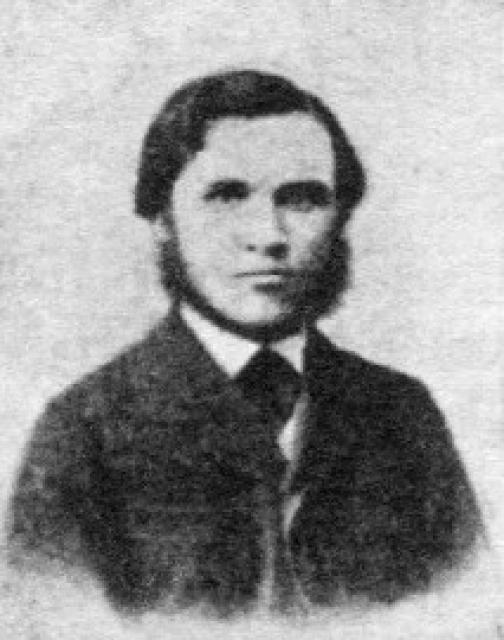
Petr Linitskiy
 Russia
- Pyotr Linitsky: A Philosopher and Theologian
- Philosophical Views
- Philosophy as a Conceptual Framework
- The Influence of National Character
- Russian Philosophical Mission
- Major Works
- "The Educational Value of Philosophy" (1872)
- "Slavophilism and Liberalism" (1882)
Pyotr Linitsky: A Philosopher and Theologian
Early Life and EducationPyotr Linitsky was born in Ukraine in an unknown year. He graduated from the Kiev Theological Academy in 1865. His master's thesis explored the different directions of German philosophy after Hegel in relation to religion. His doctoral dissertation focused on Plato's teachings on the divine.
Philosophical Views
Linitsky believed that the history of philosophy was marked by a struggle between two currents: rationalist and empiricist. He favored rationalism and criticized empiricism, arguing against attempts to construct theological systems based on empirical methods.
Philosophy as a Conceptual Framework
Linitsky viewed philosophy as the organization of fundamental concepts. Its aim was not to derive one concept from another in a sequential manner, but to establish meaningful relationships among concepts that would clarify and support each other. He believed that scientific and experiential data should serve as the basis for these concepts.
The Influence of National Character
Linitsky emphasized the importance of a thinker's character and national background in shaping philosophical perspectives. He believed that the major Western nations had developed distinct worldviews that permeated their education and gave them historical significance.
Russian Philosophical Mission
According to Linitsky, the primary goal of Russian philosophy should be to reconcile intellectual interests with the religious spirit of the Russian people. He argued that science needed to be infused with religious principles, while religious consciousness needed to be elevated.
Major Works
"General View of Plato's Philosophy" (1867)"Moral and Religious Concepts of Ancient Greek Philosophers" (1870-1872)
"The Educational Value of Philosophy" (1872)
"Overview of Philosophical Doctrines" (1874)"On Speculation and the Relation of Speculative Knowledge to Experience" (1881)
"Slavophilism and Liberalism" (1882)
"Idealism and Realism" (1884-1888)"Faith and Knowledge" (1889)
"How is the Unity of Faith and Knowledge Possible?" (1889)
"Fine Literature and Philosophy" (1893)
"Scientific and Unscientific Thinking" (1894)
"A Brief Outline of the Basic Principles of Philosophy" (1895)
"On Knowledge" (1895)
"On the Necessity of Metaphysics" (1897)
"E. Hartmann's Philosophy" (1898)
"Basic Questions of Philosophy" (1901)
"On the Immortality of the Soul and Afterlife" (1903)
"Textbook for Apologetic Theology: Philosophy of Faith" (1904)
"Slavophilism and Westernism" (1904)


