Philip Abelson
 USA
USA- Early Life and Education
- Manhattan Project and Carnegie Institution
- Editorial and Societal Contributions
- Scientific Achievements
- Transuranic Elements
- Nuclear Division, Identification, and Separation
- Biogeochemical Research
Early Life and Education
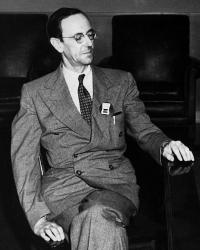
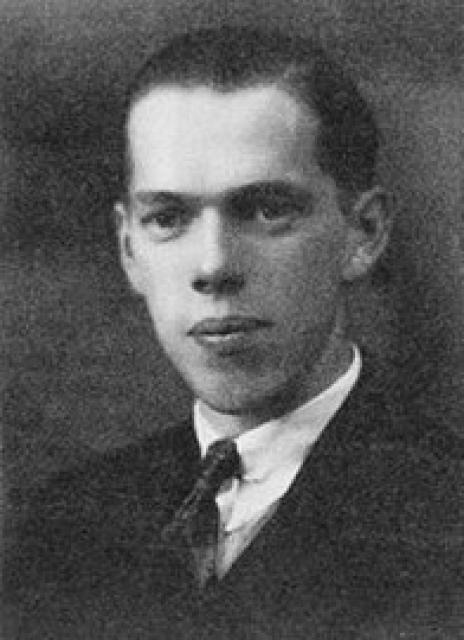
Philip Hauge Abelson (1913-2004) was an American physicist and geochemist born in Tacoma, Washington. In 1935, he graduated from Washington State College.
Manhattan Project and Carnegie Institution
From 1939 onwards, except for wartime years (1941-46) spent on the Manhattan Project, Abelson worked at the Carnegie Institution of Washington. His roles included Director of the Geophysical Laboratory (1953-71) and President of the Institution (1971-78).
Editorial and Societal Contributions
Abelson served as editor of the journal Sciencefrom 1962 to 1984. Notably, he held the presidency of the American Geophysical Union from 1972 to 1974.
Scientific Achievements
Abelson's research spanned nuclear physics, chemistry, organic geochemistry, biophysics, microbiology, and the origin of life.
Transuranic Elements
Abelson, together with E. McMillan, pioneered in the investigation of transuranium elements, discovering neptunium, the first such element, in 1940.
Nuclear Division, Identification, and Separation
His work explored nuclear fission, the identification of uranium fission products, and the separation of uranium isotopes. Notably, in 1940, he proposed the thermal diffusion method to separate uranium isotopes.
Biogeochemical Research
Abelson's contributions also included research on biosynthesis in microorganisms and the occurrence of amino acids in fossils and rocks.