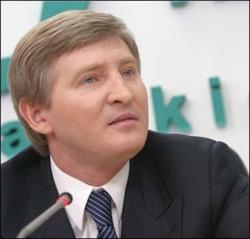
Philipp Hildebrand
 Switzerland
Biography of Philipp Hildebrand
Philipp Hildebrand was born on July 19, 1963, in Bern, Switzerland. He studied at the University of Toronto, Oxford University, and the Graduate Institute of International Studies in Geneva. During his time as a student, Hildebrand was part of a group that assisted at the annual World Economic Forum in Davos, Switzerland, where he interacted with leading international government officials and bankers. In 1994, he began his professional career at the World Economic Forum. He later worked at Moore Capital Management, a hedge fund in New York, where he met his future wife Kashya, an American of Pakistani origin who was also a financial professional. Hildebrand then joined the Swiss National Bank in 2003, becoming one of the youngest high-ranking officials there.

Career and Achievements
Hildebrand served as the Chairman of the Governing Board and Head of the Department of Economic Affairs, International Affairs, Legal and Property Services at the Swiss National Bank in Zurich, a position he was appointed to by the Swiss Federal Council on January 1, 2010. He also became a member of the Board of Directors of the Bank for International Settlements in Basel and the Deputy Chair of the Financial Stability Board. In 2008, he became a member of the Group of Thirty, an international association of financiers and economists.

Hildebrand faced severe criticism for losses incurred during the Swiss National Bank's intervention in the exchange rate market between March 2009 and June 2010. Despite accumulating currency reserves of over 200 billion Swiss francs, the bank suffered losses of 26.5 billion Swiss francs in 2010 and 11.7 billion Swiss francs in the first half of 2011. While the bank defended its measures, some international publications and financial analysts deemed them costly failures.

Resignation and Controversy
Hildebrand's resignation came on January 9, 2012, following the revelation of currency transactions made by his wife Kashya. The Swiss People's Party and the magazine 'Weltwoche' had called for his resignation, but prominent political figures from other parties supported Hildebrand, emphasizing the political independence of the Swiss National Bank. Hildebrand was seen as a driving force behind the Swiss franc's peg to the euro, which was announced on September 6, 2011.

In August 2011, Kashya Hildebrand, with her 16 years of experience in financial markets, made a profit of 60,000 Swiss francs ($64,400) from currency transactions. Hildebrand attempted to prevent the possibility of such deals in the future, but his wife insisted on her independence in the financial and banking sector. In January 2012, Hildebrand denied allegations of insider trading regarding the transaction and referred to the media coverage as a "defamatory campaign." Nonetheless, he resigned from his position due to the loss of trust, stating that "trust is the most valuable asset of a central bank." He also resigned from his positions at the Bank for International Settlements and the International Monetary Fund.