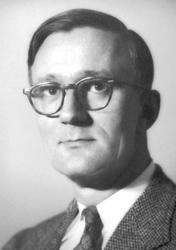
Ernst Mach
 Austria
Biography of Ernst Mach
Ernst Mach was an Austrian physicist and idealist philosopher. He was born on February 18, 1838, in the small village of Chirlitz in the suburbs of Brno, Moravia, which was then part of the Austro-Hungarian Empire. His father, Johann Mach, was a philologist by profession, but he was also interested in natural sciences. For many years, he worked as a private tutor. However, Ernst struggled with learning ancient languages, and his father had to take charge of his education. Despite this setback, Ernst excelled in his studies, and at the age of fifteen, he was able to skip several classes and enter the Gymnasium Kroměříž.
After completing his education at the Gymnasium, Mach became a student at the University of Vienna in 1855. He developed a strong interest in mathematics and natural sciences from an early age. At the university, Mach focused primarily on physics, studying under the guidance of A. Ettinhausen. Although he later wrote works on philosophy, history of science, psychology, and mechanics, Mach considered himself primarily a physicist and not a philosopher or psychologist. In 1860, he earned his doctorate and became a lecturer at the university. Despite financial difficulties, Mach continued his research while giving numerous lectures to support himself.
In 1864, Mach was invited to be a professor of mathematics in Graz. While teaching mathematics, he continued to pursue his interests in physics and physiology. In 1866, he transferred to the physics department at the same university. During this period, Mach published three books and twenty-seven articles, with his most significant achievement being the discovery of the Mach bands, a psychophysical effect. In 1867, he became a professor of experimental physics in Prague, which provided him with better financial stability. He married that same year and established his own laboratory with equipment and assistance. Mach spent thirty years teaching a course on experimental physics in Prague, focusing on optics, acoustics, and shock waves. He also created several original demonstration devices, including the "wave machine," which is still used in physics laboratories.
In the 1870s and 1880s, Mach delved into the history of science, and his work "Mechanics: An Historical and Critical Account of its Development," published in 1873, became a classic. He also conducted research on the Doppler effect, developing a simple device to demonstrate its validity. In 1894, tragedy struck when his son Heinrich, a promising young chemist, committed suicide. Overwhelmed with guilt, Mach moved to Vienna in 1895. He found great success as a lecturer at the University of Vienna, teaching courses on the history of physics, science, and various topics in psychology.
In 1896, Mach published the book "Principles of Heat" and began working on a similar work on optics. However, his progress was interrupted by a stroke in 1898, which partially paralyzed him. Although he recovered, he could no longer give lectures, and he retired in 1900. Despite this setback, Mach continued his scientific work and became a member of the Austrian Parliament for several years. In 1908-1910, he engaged in a heated debate with Max Planck regarding the theory of knowledge. During this time, Mach completed his book "Optics," but its publication was delayed due to the outbreak of World War I.
In one of his last works, "Culture and Mechanics," published in 1915, Mach developed the idea that science is rooted in social practice and shaped by it. In 1912, Mach moved to Germany to live with his eldest son Ludwig. He passed away on February 19, 1916, at Ludwig's home.