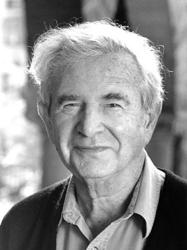
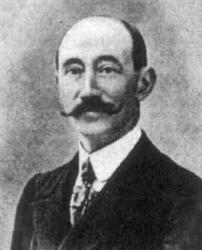
Philipp Ludwig Seidel
 Germany
Biography of Philipp Ludwig von Seidel
Philipp Ludwig von Seidel was a German mathematician and astronomer who was born in 1821 into a family of postal workers. Due to his family's frequent relocations, Seidel moved from place to place throughout his childhood. He attended Berlin University from 1840 to 1842, followed by Königsberg University from 1842 to 1843, and finally Munich University, where he received his doctorate in 1846.
Academic Career
Seidel defended his dissertation titled "Über die beste Form der Spiegel in Teleskopen" ("On the Best Form of Mirrors in Telescopes") and obtained his doctoral degree. Just six months later, after completing his habilitation and presenting his dissertation "Untersuchungen über die Konvergenz und Divergenz der Kettenbrüche" (Investigations on the Convergence and Divergence of Continued Fractions) in the field of mathematics rather than astronomy, he became a lecturer at the university.
In 1851, Seidel was appointed as an extraordinary professor and later became a professor at Munich University in 1855. One notable student of Seidel's was Max Planck, who stated that he learned a great deal from his teacher. In 1851, Seidel was elected as a correspondent member of the Bavarian Academy of Sciences, and in 1861, he became a full member of the academy.
However, due to vision problems, Seidel retired early from his position as the director of the Bogenhausen Observatory, where he served from 1879 to 1882.
Scientific Contributions
Seidel's scientific work primarily focused on mathematics and astronomy. In 1856, he developed the theory of aberrations in optical systems of the third order. In 1865-1866, based on Seidel's theory, Adolf Hugo Steinheil (the son of a German optician and founder of an optical factory, Karl Steinheil) calculated and constructed a portrait lens called an aplanat. This lens became the main type of lens used by photographers in the late 19th and early 20th centuries.
Using Karl Steinheil's photometer, Seidel conducted astronomical observations to determine the brightness of stars. In 1863, he published the work "Results of Photometric Measurements of 208 Major Fixed Stars," which was the first photometric star catalog of scientific significance. Additionally, Seidel studied the brightness of major planets and the absorption of light by the Earth's atmosphere.
In the field of pure mathematics, Seidel's works mainly revolve around the theory of series and other objects of mathematical analysis. In a publication from 1874, he proposed an iterative method for solving systems of linear algebraic equations, now known as the Gauss-Seidel method or simply the Seidel method.
Legacy
In 1970, the International Astronomical Union named a crater on the far side of the moon after Philipp Seidel, honoring his contributions to astronomy.